
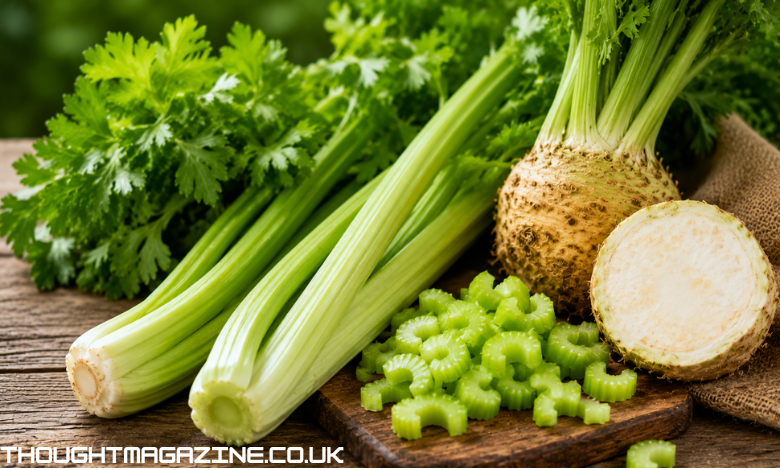
Pravi Celer is a regional term associated with the celery plant, a vegetable and culinary herb that has been used for centuries. The name comes from Croatian and related South Slavic language usage. In Croatian, “celer” refers to celery, while “pravi” generally means real, genuine, or true. For this reason, Pravi Celer can be understood as “true celery” or “real celery.”
The plant identified by this name is generally Apium graveolens, the species from which common stalk celery and celeriac have been developed. Pravi Celer should not be confused with a newly discovered vegetable, a separate medicinal herb, or a special commercial product. The term is mainly a regional way of identifying the familiar celery plant.
The history of celery reaches back thousands of years. Wild forms of the plant grew naturally in damp areas of Europe, North Africa, and parts of western Asia. Historical evidence suggests that celery-like plants were known to ancient Mediterranean civilizations. The ancient Greeks and Romans used celery for different cultural, culinary, and practical purposes. However, the development of celery into the cultivated vegetable recognized today took place gradually over many centuries.
By the 16th and 17th centuries, European gardeners were selecting and cultivating celery more systematically. Efforts were made to produce plants with better-tasting stalks, less bitterness, and more useful edible parts. By the 18th and 19th centuries, different forms of celery had become established in European kitchens and gardens.
The usefulness of Pravi Celer comes from its versatility. Its stalks can be eaten raw or cooked, the leaves can be used for seasoning, and certain cultivated forms produce the swollen base known as celeriac. It is also valued for its high water content, crisp texture, low calorie content, and ability to add a recognizable aroma to meals.
What Does the Name Pravi Celer Mean?
Understanding the name helps remove much of the confusion surrounding the term. “Pravi” is commonly translated as true, real, proper, or genuine, depending on the context. “Celer” is the Croatian word used for celery.
Together, the words identify what can be described in English as true celery. The expression does not necessarily indicate superior quality. A vegetable sold as Pravi Celer is not automatically organic, more nutritious, or grown without agricultural chemicals.
Regional plant names often develop because people need to distinguish one species from similar-looking plants or other members of the same botanical family. The use of “pravi” may therefore help emphasize the recognised celery plant rather than an unrelated herb with a similar local name.
The Botanical Identity of Pravi Celer
Pravi Celer belongs to the species Apium graveolens and the Apiaceae plant family. This family also contains several familiar vegetables and herbs, including carrots, parsley, parsnips, fennel, and coriander.
Celery normally develops through a two-year growth cycle under natural conditions. During the first growing season, the plant concentrates on producing leaves, stalks, and roots. If allowed to continue growing, it can flower and produce seeds during the second year.
Modern agriculture usually treats celery as an annual crop because growers harvest it during the first season. The plant is removed before it completes its natural biennial life cycle.
One of the most important features of the species is the variety of forms produced through cultivation. Some celery plants are selected for thick stalks, while others are grown for leaves or enlarged bases.
Where Did Pravi Celer Originally Come From?
The early ancestors of cultivated celery grew in wet and moderately salty environments across parts of Europe, the Mediterranean region, North Africa, and western Asia. Wild celery could often be found near marshes, streams, riverbanks, and other places where the ground remained moist.
Unlike many crops that tolerate occasional dry conditions, celery developed from plants adapted to regular access to water. This background explains why modern celery cultivation still requires careful irrigation.
The exact point at which humans began intentionally growing celery as food is difficult to identify. Ancient societies knew the plant, but early celery was probably quite different from the thick, crisp vegetable found in modern shops. Wild celery was generally thinner, stronger in taste, and more bitter.
Generations of cultivation gradually changed these characteristics.
The Historical Development of Celery
Celery has a long relationship with human societies, but its role has changed considerably. Ancient Mediterranean cultures did not always treat it as an everyday vegetable. It could be connected with ceremonies, traditional practices, and herbal preparations.
The Greeks and Romans were familiar with celery and related plants. Over time, people began paying greater attention to its culinary potential.
A major change occurred in Europe during the later medieval and early modern periods. Gardeners started selecting plants with more desirable characteristics. Less bitter varieties were preferred, while plants with larger and softer edible sections were repeatedly cultivated.
By approximately the 17th century, celery was becoming more established as a food crop in parts of Europe. During the following centuries, cultivation methods improved, and recognizable varieties of stalk celery and celeriac became increasingly common.
This long process explains why modern Pravi Celer can look quite different from its wild ancestors.
Different Cultivated Forms of Pravi Celer
Not every celery plant is grown for the same purpose. Farmers and gardeners have developed several forms of Apium graveolens according to the part of the plant they want to harvest.
Stalk celery is probably the most familiar type. It is grown for its long, crisp leaf stalks. These stalks are commonly eaten raw, added to salads, or cooked in soups and stews.
Leaf celery is cultivated mainly for its strongly flavoured leaves and thinner stalks. It is often used as a seasoning rather than as a large raw vegetable.
Celeriac is another important cultivated form. Instead of producing large edible stalks, it develops a thick, rounded base. This section is peeled before being eaten and can be roasted, boiled, mashed, or grated.
These forms look different, but they share the same basic botanical origin.
Appearance and Physical Characteristics
The appearance of Pravi Celer depends heavily on the variety and growing conditions. A typical stalk celery plant develops several upright green stalks connected near the base. Leaves grow at the upper ends of these stalks.
The colour can range from pale green to dark green. Some varieties have thick, relatively mild stalks, while others are thinner and stronger in flavour.
Healthy fresh celery usually feels firm and breaks with a noticeable snap. Limp stalks often indicate moisture loss or extended storage.
Celeriac looks considerably different. Its edible base is large, rounded, rough, and irregular. The outer surface is removed before preparation, revealing the firm flesh underneath.
Why Pravi Celer Is Considered Useful
The usefulness of celery is based on practical qualities rather than exaggerated health claims. Almost every major edible section of the plant can serve a purpose in the kitchen.
The stalks provide crunch and moisture. The leaves offer a concentrated celery aroma. Celeriac provides a dense vegetable suitable for cooking. Celery seeds are also used in certain seasoning preparations.
Another advantage is that celery can fit into many types of meals. It can be served raw, lightly cooked, slowly simmered, roasted, blended, or used as an aromatic ingredient.
Its strong natural flavour means that a relatively small quantity can influence the taste of an entire dish.
Nutritional Profile of Pravi Celer
Pravi Celer is largely composed of water. This is one reason fresh stalks have a crisp and refreshing texture.
Celery is also relatively low in calories. A typical serving contributes carbohydrates, dietary fibre, and small quantities of several vitamins and minerals.
Nutrients associated with celery include vitamin K, folate, potassium, vitamin C, vitamin A, and calcium. The exact nutritional content depends on serving size, variety, freshness, soil conditions, and preparation.
Celery should be viewed as one part of a varied diet. Eating it does not provide every nutrient the human body requires, and it should not replace other vegetables, fruits, protein sources, grains, and healthy fats.
Water Content and Hydration
One of the main physical characteristics of celery is its high water content. Fresh stalks are mostly water, which contributes to their crisp structure.
Eating water-rich foods can contribute to overall fluid consumption. Celery can therefore be a refreshing food during hot weather or as part of a meal after physical activity.
However, eating celery is not a replacement for drinking sufficient fluids. Its water content is an additional dietary benefit rather than a complete hydration strategy.
Fibre and Digestive Health
Whole celery contains dietary fibre. Fibre plays an important role in maintaining normal digestive function and can contribute to feelings of fullness after eating.
The amount of fibre in an individual serving of celery is not extremely high, but it can contribute to total daily fibre intake when combined with other plant foods.
This is also one reason whole celery and celery juice are not nutritionally identical. Juicing methods that remove the pulp may also remove part of the natural fibre.
Eating the complete stalk keeps more of the original plant structure.
Pravi Celer and Weight Management
Celery is often connected with weight-loss discussions because it contains relatively few calories. Its crunchy texture also makes it suitable for snacks and salads.
However, claims that celery directly burns body fat are misleading. No individual vegetable can independently cause significant fat loss.
Body weight is influenced by overall calorie intake, physical activity, sleep patterns, medical conditions, and other factors.
Pravi Celer can be included in meals designed around balanced nutrition, but its effectiveness depends on the foods eaten with it and the wider dietary pattern.
How Pravi Celer Is Used in Cooking
Celery is one of the most flexible vegetables in everyday cooking. Fresh stalks can be washed, sliced, and served without cooking.
They are commonly included in green salads, pasta salads, sandwiches, lunch boxes, and vegetable snack plates. Their firm texture works particularly well with softer ingredients and dips.
Cooking changes the vegetable considerably. Heat softens the stalks and reduces some of their sharp raw flavour.
Celery is frequently cooked alongside carrots and onions. Together, these vegetables create a flavour base for soups, sauces, stocks, and slow-cooked dishes.
Using Celery Leaves
The leaves of Pravi Celer are sometimes discarded, but they can be valuable kitchen ingredients.
Celery leaves generally have a stronger and more concentrated flavour than the stalks. They can be chopped and added to soups, rice dishes, sauces, salads, potatoes, and egg recipes.
Because their flavour can be strong, a small quantity is often sufficient.
The leaves can also be added near the end of cooking when a fresher celery aroma is preferred.
Understanding Celeriac
Celeriac is closely related to ordinary stalk celery but has been cultivated for a different purpose. Its main edible feature is the enlarged section near the base of the plant.
The rough exterior can make the vegetable look difficult to prepare. After peeling, however, the inside can be treated in several ways.
Raw celeriac can be grated into salads. Cooked versions can be boiled, mashed, roasted, or blended into soup.
Its flavour resembles celery but is generally denser and more earthy. This makes it suitable for meals where ordinary celery stalks would not provide enough texture.
Celery Juice and Common Health Claims
Celery juice has attracted considerable attention because of claims related to detoxification, digestion, weight loss, and disease prevention.
Some of these claims go far beyond what can reasonably be expected from a vegetable juice.
Celery juice provides water and certain nutrients. It can be consumed as part of a normal diet if a person enjoys it. However, it should not be treated as a medicine or a replacement for professional medical care.
The human body already has organs responsible for processing and removing waste products. Drinking celery juice does not create a special cleansing system.
Whole celery also has the advantage of retaining more natural fibre.
How to Select Fresh Pravi Celer
Freshness has a major effect on the quality of celery. Good stalks should feel firm rather than soft or flexible.
The leaves should look fresh, and the stalks should not contain extensive dark spots, slime, or serious damage.
Colour alone does not always determine quality because different varieties naturally produce different shades of green.
A fresh bunch should generally feel solid for its size. Stalks that bend easily without breaking may have lost a considerable amount of moisture.
Storage and Preservation
Celery should be stored in cool conditions to slow moisture loss. Refrigeration is the most practical option for household storage.
The vegetable should be protected from excessive drying while avoiding conditions that encourage rotting.
Before using stored celery, damaged areas should be removed and the remaining sections washed carefully.
Celery can also be frozen, but freezing changes its texture. Thawed stalks are usually too soft for raw salads but remain useful for soups, sauces, and cooked dishes.
Growing Pravi Celer at Home
Growing celery can require more attention than cultivating some other garden vegetables. The plant develops best when moisture, soil fertility, and temperature are carefully managed.
The soil should contain enough organic matter to support steady growth. Regular watering is especially important because celery plants do not respond well to extended dry periods.
A sunny growing position is generally useful, although conditions may vary according to the local climate.
Plants should also have enough space for air circulation and healthy development. Crowded conditions can interfere with growth and make plant management more difficult.
Why Consistent Watering Matters
The wild ancestors of modern celery naturally grew in damp environments. Modern cultivated forms still reflect this background.
If the soil repeatedly becomes too dry, the stalks may become tougher, thinner, or more strongly flavoured. Uneven watering can also interfere with steady plant development.
The goal is not to leave plants permanently flooded. Instead, growers should maintain regular soil moisture while allowing appropriate drainage.
This balance is one of the main challenges of successful celery cultivation.
Harvesting the Plant
Harvest time depends on the variety, climate, and intended use. Individual outer stalks can sometimes be removed as needed, while entire plants may also be harvested together.
The best time is generally when the stalks have reached a useful size but remain fresh and firm.
Celeriac requires a longer growing period because the enlarged base needs time to develop.
Gardeners in colder climates usually complete harvesting before severe winter conditions damage the crop.
Possible Celery Allergies
Although Pravi Celer is safely eaten by many people, celery allergy is an important concern for certain individuals.
Symptoms can range from mild reactions to serious medical emergencies. Possible signs include itching around the mouth, swelling, skin reactions, coughing, wheezing, or breathing problems.
People with diagnosed celery allergies need to consider more than fresh stalks. Celery can appear in soups, seasoning blends, sauces, stocks, powders, seeds, and celery salt.
Anyone experiencing severe swelling or difficulty breathing after eating celery requires urgent medical assistance.
Common Misunderstandings About Pravi Celer
One common misunderstanding is that Pravi Celer refers to a rare plant with special nutritional qualities. In normal usage, the term is simply connected with celery.
Another misconception is that the word “pravi” guarantees organic cultivation. The name does not describe the farming method.
Celery grown with synthetic agricultural products and celery produced through organic methods may both belong to the same plant species.
The term also does not indicate that the vegetable is automatically wild. Most celery purchased for food has been cultivated from varieties developed for agricultural production.
The Role of Pravi Celer in Traditional and Modern Food
Celery has remained useful because it serves several different purposes. It can function as a raw vegetable, a cooked ingredient, an aromatic base, a seasoning herb, or a source of a larger edible base in the form of celeriac.
Traditional cooks valued celery because its aroma could improve simple soups, stocks, and stews. Modern cooking continues many of the same practices while also using the plant in salads, juices, smoothies, snacks, and vegetable-based meals.
The methods of preparation may change, but the basic value of the plant remains practical.
Conclusion
Pravi Celer is the Croatian term commonly associated with true or garden celery, botanically known as Apium graveolens. The name reflects regional language rather than a separate or mysterious plant variety.
Its history can be traced to wild celery plants that grew in damp regions of Europe, the Mediterranean area, North Africa, and western Asia. Ancient societies knew the plant, while European cultivation over later centuries helped transform stronger wild forms into the stalk celery, leaf celery, and celeriac varieties used today.
Pravi Celer remains useful because different parts of the plant can be eaten and prepared in many ways. The stalks provide a crisp vegetable, the leaves serve as a seasoning, and celeriac offers a dense ingredient suitable for raw and cooked dishes.
Nutritionally, celery is mainly valued as a water-rich, low-calorie vegetable that supplies fibre and several vitamins and minerals in modest quantities. It can contribute to a balanced diet but should not be presented as a miracle food, fat-burning vegetable, or medical treatment.
Whether grown in a garden, added to soup, served raw with a dip, or prepared as celeriac, Pravi Celer continues to be a practical food plant with a long history and a clear place in everyday cooking.