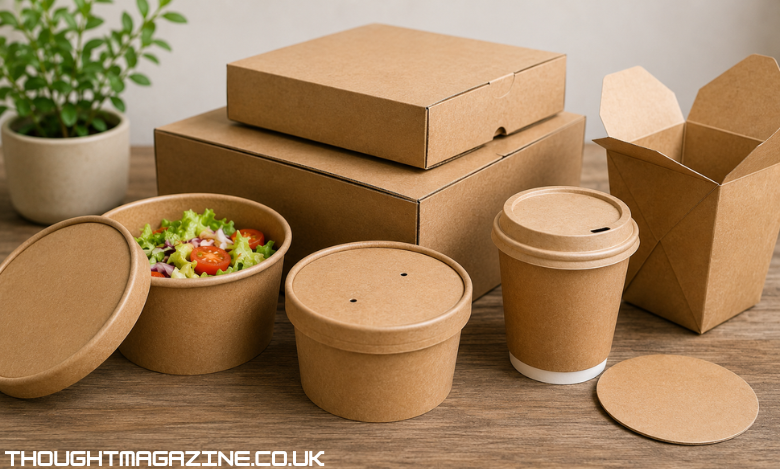
Pappedeckel is a term connected with cardboard lids, covers, and flat pieces of paperboard used to close or protect different products. The word is mainly associated with German language usage, although spelling variations can also be found online. In practical terms, it usually describes an item made from cardboard that works as a lid or protective cover.
Cardboard lids can be found in restaurants, cafés, retail packaging, storage products, delivery services, and household applications. Their appearance depends on their purpose. Some are simple flat pieces placed over containers, while others have folded edges, fitted rims, tabs, or specially designed shapes.
The growing use of paper-based packaging has also brought more attention to products such as Pappedeckel. Businesses are reviewing the materials they use for packaging, while customers are becoming more interested in how products are manufactured and disposed of. However, understanding cardboard packaging requires more than simply looking at the material. Strength, moisture resistance, food safety, coatings, size, and disposal methods are all important factors.
What Is Pappedeckel?
Pappedeckel generally means a lid or cover manufactured from cardboard or thick paperboard. Its basic purpose is to create a protective layer between a product and the outside environment.
The design can be extremely simple. A flat cardboard disc, for example, may be placed over a round container. More developed versions can include raised sides or folded sections that grip the edges of a box or bowl.
The term does not describe one specific product with fixed measurements or materials. Instead, it can apply to different types of cardboard covers. The intended use determines how the lid is manufactured.
A cover designed for a gift box will be different from one used for takeaway food. Similarly, packaging intended for a dry product will have different requirements from packaging exposed to liquids or grease.
Understanding the Basic Purpose of a Cardboard Lid
The main purpose of a cardboard lid is protection. Products can be exposed to dust, handling, movement, light contact, and other conditions during storage or transportation.
A suitable cover helps create a barrier around the contents. In food packaging, this may help keep a meal inside its container while it is carried from a restaurant to a customer. In retail packaging, a cardboard cover can protect clothing, accessories, cosmetics, or household products.
Another purpose is organisation. Boxes and containers with properly fitted lids are generally easier to stack and store. This can be useful for businesses managing large quantities of products.
A Pappedeckel can therefore perform several jobs despite its relatively simple construction.
Different Forms of Pappedeckel
There is no single standard design used for every cardboard lid. Manufacturers create different forms according to the containers and products they need to cover.
Flat lids are among the simplest designs. They are cut to the required shape and placed directly over a container. Some may fit inside a rim, while others rest on top.
Folded cardboard lids have additional sections around the edges. These sections can increase strength and help the cover remain attached to the container.
Other designs use tabs that fit into openings or slots. This can reduce the need for additional adhesives or fasteners.
Round cardboard covers may be produced for cups and food bowls. Rectangular or square versions are more common for product boxes and storage containers.
The variety of available designs makes cardboard suitable for many packaging situations.
Materials Commonly Used for Pappedeckel
Cardboard lids can be produced from several types of fibre-based material. The selection depends on the level of strength and protection required.
Paperboard is commonly used because it is lightweight and can be easily cut and folded. It also provides a smooth surface for printing.
Kraft board is another option. It is often recognised by its natural brown appearance, although it can also be treated or printed.
Thicker cardboard may be selected for packaging that requires additional support. Corrugated material can be useful when the lid needs greater strength during storage or transportation.
Some products are manufactured from shaped paper fibres instead of flat sheets. This production method can create curved or fitted designs.
Recycled fibres may also be included in certain cardboard products. The exact material composition varies between manufacturers and applications.
How Pappedeckel Is Produced
The production process depends on the final design. A basic flat lid can be manufactured by cutting large sheets of paperboard into smaller pieces of the required dimensions.
Industrial cutting machines allow manufacturers to produce large numbers of lids with consistent shapes.
More complicated packaging designs may use die-cutting. A specially prepared cutting tool creates the shape, fold lines, openings, and tabs required for the product.
After cutting, the cardboard may be folded or pressed into its final form. Some designs require adhesive to hold sections together, while others use locking structures.
Printing and surface treatments can also be added during manufacturing. The order of these processes depends on the type of packaging being produced.
Before the products are distributed, manufacturers may check their measurements, strength, appearance, and general performance.
Pappedeckel in Takeaway Food Packaging
Takeaway businesses require packaging that can handle movement between the restaurant and the customer. A meal may travel by car, motorcycle, bicycle, or on foot before it reaches its destination.
A cardboard lid can help close the container and reduce direct exposure of the food during transportation.
Restaurants may use these lids for rice dishes, salads, pasta, noodles, bakery items, snacks, and many other foods.
The design must match the container correctly. If the lid is too large, it may move or fall off. If it is too small, workers may have difficulty closing the package.
A secure fit becomes particularly important for delivery orders because the packaging can experience movement throughout the journey.
The Importance of Matching the Lid and Container
Choosing a Pappedeckel based only on its general appearance can lead to problems. Accurate measurements are necessary.
A business should consider the length, width, diameter, depth, and shape of the container rim.
Even small differences can affect how securely the lid closes. A cover that appears suitable during a quick inspection may become loose when containers are stacked or transported.
Testing is therefore important before placing a large packaging order.
Businesses can fill sample containers with their normal products and check how the packaging performs under realistic conditions.
The lid should remain in place without requiring excessive pressure to close it.
Use with Hot and Cold Food
Temperature can affect cardboard packaging. A lid that works well with cold food may behave differently when placed over a hot meal.
Hot food can release steam. The moisture created inside the package may soften certain types of cardboard.
For this reason, some packaging designs include small ventilation openings. These openings allow part of the steam to escape.
Cold foods create different challenges. Moist ingredients, sauces, and condensation can affect the strength of untreated cardboard.
Businesses should select packaging according to the type of food they actually sell rather than using one product for every situation.
Moisture and Grease Resistance
Standard cardboard can absorb water and oil. Once the fibres become wet, the material may lose some of its strength.
Food packaging manufacturers may add protective barriers to improve resistance.
A barrier can help the Pappedeckel remain stable when exposed to moisture or greasy food. However, the type and amount of additional material can vary.
Businesses should understand what treatment has been applied to the packaging they purchase.
This information is useful for both performance and disposal. A lid containing additional materials may need to be handled differently from plain cardboard.
Food Safety Considerations
Packaging that comes into contact with food should be designed for that purpose.
Businesses should not assume that every piece of cardboard is suitable for use with meals or drinks.
A food lid may come into direct contact with the contents, particularly when containers are filled completely or moved during transportation.
The material, printing, adhesives, and surface treatments should therefore be appropriate for the intended application.
Temperature limits should also be considered. Packaging suitable for cold snacks may not be designed for extremely hot food.
Restaurants and food sellers should obtain clear product information when selecting their packaging supplies.
Pappedeckel for Drinks
Cardboard and fibre-based materials can also be used in packaging systems for beverages.
Drink packaging presents particular challenges because liquids can quickly affect unsuitable paper materials.
The cover must fit the cup properly and remain stable during use. For hot beverages, it must also tolerate the expected temperature.
Condensation can be an issue with cold drinks. Moisture may collect around the outside of the container and come into contact with the lid.
Because of these conditions, drink covers should be specifically manufactured for their intended purpose.
Use in Retail Boxes
Retail packaging is another major application for cardboard covers.
Shops and manufacturers use boxes with removable lids for clothing, jewellery, cosmetics, electronics, gifts, and household products.
In these applications, the Pappedeckel can protect the contents while also becoming part of the product presentation.
A well-designed box can be opened and closed several times. This is useful for products that customers may continue storing in the original packaging.
The lid can also provide space for printed information and visual branding.
Cardboard Covers in Storage
Cardboard lids are commonly used with storage boxes in homes, offices, shops, and warehouses.
A covered box helps protect its contents from dust and general contact. It can also make storage areas appear more organised.
Documents, photographs, clothing, decorations, toys, and lightweight household items may be kept in cardboard boxes.
However, storage conditions should be considered carefully. Cardboard can be affected by dampness and high humidity.
Boxes should normally be kept in clean, dry areas if they are expected to remain usable for a long period.
The Printing Potential of Pappedeckel
A cardboard surface can provide useful space for printed content.
Companies can place their name, logo, contact details, product information, or instructions directly on the lid.
Food businesses may include ingredients, warnings, or handling messages when appropriate.
QR codes can also be printed on packaging. Customers can scan them to access menus, websites, product information, or promotional material.
The ability to print directly onto the Pappedeckel can reduce the need for separate labels in some packaging designs.
Why Packaging Design Matters
A cardboard lid is not only a piece of material placed over a container. Its design can affect how easily people use the complete package.
Workers in busy restaurants need packaging that can be closed quickly. Customers need to be able to open the container without unnecessary difficulty.
Retail businesses may want packaging that protects the product while presenting it in an organised way.
Manufacturers therefore need to consider practical use during the design process.
The shape, thickness, folding system, and fitting method should all support the intended purpose.
Advantages of Pappedeckel
One advantage of cardboard lids is their relatively low weight. Large quantities can often be stored and transported without adding excessive weight.
Another advantage is flexibility in design. Cardboard can be cut into many shapes and produced in different thicknesses.
Printing is also relatively straightforward. Businesses can use the surface for branding and customer information.
Some designs can be stored flat before use, helping businesses manage available storage space.
Cardboard lids can also be produced for a wide range of products, from small food containers to larger retail boxes.
Limitations That Should Be Considered
Despite its usefulness, Pappedeckel is not suitable for every packaging situation.
Untreated cardboard can become weak after contact with liquids.
Very heavy products may require stronger materials. Packaging exposed to rough transportation conditions may also need additional protection.
Another limitation involves coatings. Adding barriers can improve resistance to moisture and grease, but it may make the final packaging structure more complicated.
Businesses should consider these factors before replacing an existing packaging system.
The best material is the one that meets the actual needs of the product rather than simply following a packaging trend.
Pappedeckel and Plastic Reduction
Many companies are exploring ways to reduce the amount of conventional plastic used in packaging.
Cardboard lids may form part of this process. In certain applications, a fibre-based cover can replace a component previously made entirely from plastic.
However, the complete packaging design should be examined.
Some cardboard products include thin layers or coatings that are not made from paper. Adhesives and other materials may also be present.
For this reason, the appearance of cardboard does not provide complete information about the composition of the packaging.
Businesses should understand their products before making claims about plastic reduction or disposal.
Can Pappedeckel Be Recycled?
Whether a cardboard lid can be recycled depends on several conditions.
Clean and dry cardboard is generally easier to process than material covered with food, oil, or moisture.
The construction of the lid is also important. A simple fibre-based product may be easier to handle than packaging made from several materials permanently attached together.
Customers should look for disposal instructions where available.
Local recycling systems can have different collection requirements. Following local waste guidance is therefore more reliable than assuming every cardboard product belongs in the same bin.
Why Food Contamination Creates Problems
A Pappedeckel used for takeaway food can become covered with sauces, grease, and leftover ingredients.
This contamination can create difficulties during the recycling process.
Removing large pieces of food before disposal can help keep recyclable materials cleaner.
However, badly soaked or heavily contaminated cardboard may not be suitable for a standard paper recycling collection.
Businesses can help customers by giving clear instructions when their packaging requires a specific disposal method.
Reusing Clean Cardboard Lids
Not every Pappedeckel needs to be thrown away immediately after its first use.
Clean cardboard covers can sometimes be reused for household organisation or creative projects.
Children and adults can use cardboard pieces for drawing, models, decorations, labels, and other craft activities.
Small lids may also be useful as temporary separators or protective pieces during storage.
Food hygiene should always be considered. Cardboard that has absorbed grease, liquid, or food waste is not a suitable material for reuse projects.
Cardboard Drink Coasters and Related Uses
The term Pappedeckel and its related forms may also appear in discussions about cardboard drink coasters.
These items are placed under glasses, cups, and bottles to protect table surfaces.
Coasters are generally manufactured from thick, absorbent cardboard. They can collect small amounts of liquid caused by spills or condensation.
Restaurants, cafés, and beverage businesses often print logos or advertising messages on them.
Although a drink coaster and a food container lid have different functions, both demonstrate how cardboard can be shaped into simple products for everyday use.
Choosing Pappedeckel for a Business
Businesses should begin by identifying exactly what the packaging needs to do.
The first question is what type of product will be covered. Food, drinks, retail goods, and storage items all have different requirements.
The next step is measuring the container accurately.
Businesses should then consider temperature, moisture, grease, transportation, stacking, and expected storage time.
Printing requirements may also affect the choice. Companies planning to include branding or detailed product information should confirm that the surface is suitable.
Testing samples under normal working conditions can prevent problems before a large order is placed.
Common Mistakes When Selecting Cardboard Lids
One common mistake is choosing the wrong size.
Another is assuming that all cardboard products can handle moisture or heat.
Businesses may also focus entirely on appearance without considering how the packaging performs during delivery.
Using more material than necessary is another potential issue. An excessively thick lid may increase costs and storage requirements without providing a meaningful advantage.
Making unclear environmental claims can also create confusion. Companies should understand the materials used in their packaging before describing how it should be recycled or disposed of.
The Future of Pappedeckel Design
The development of cardboard packaging is likely to continue as manufacturers work on new structures and fibre-based materials.
Future designs may focus on achieving the required strength while reducing unnecessary material.
Simpler packaging construction could also make disposal instructions easier for customers to understand.
Manufacturers may continue developing improved barriers for food and drink applications. The challenge will be balancing moisture resistance, product safety, manufacturing costs, and waste management.
Businesses are also likely to request more detailed information about packaging composition before selecting suppliers.
These developments could influence how Pappedeckel products are designed and used across different industries.
Conclusion
Pappedeckel is a practical term for cardboard lids, covers, and related paperboard pieces used in packaging and other everyday applications. Although the basic product is simple, its design can involve important decisions about materials, dimensions, strength, moisture resistance, food safety, printing, transportation, and disposal.
Restaurants can use cardboard covers for takeaway containers, while retailers may use them for product boxes. Storage applications, drink packaging, printed promotional materials, and craft projects provide additional uses.
The performance of a Pappedeckel depends on selecting the right product for the intended situation. A lid should fit its container properly, tolerate expected conditions, and provide the required level of protection.
Businesses and consumers should also avoid assuming that every cardboard product has identical environmental characteristics. Coatings, contamination, additional materials, and local waste systems can all influence disposal options.
By considering the complete design rather than focusing only on appearance, businesses can choose cardboard lids that meet practical packaging needs while giving customers clearer information about their correct use and disposal.