
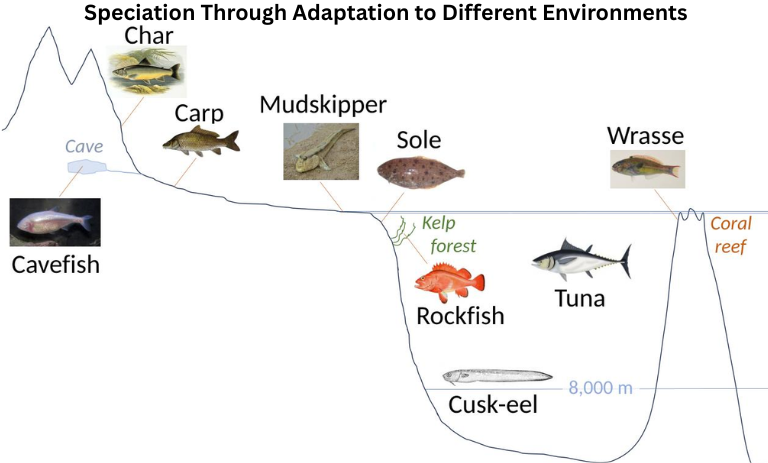
Life on Earth is constantly changing. Species that exist today are the result of millions of years of evolutionary processes that have shaped populations, environments, and biological relationships. One of the most important processes responsible for the variety of life is speciering, also known as speciation.
Speciering describes the evolutionary pathway through which a population of organisms gradually becomes separated into two or more different species. This transformation occurs when groups that once shared the same genetic background begin developing unique characteristics that separate them from one another.
A species is generally defined as a group of organisms that can reproduce with each other and produce viable offspring. During speciering, populations slowly lose the ability to exchange genes effectively. As genetic differences accumulate, they eventually become independent species with their own characteristics, behaviors, and adaptations.
The process does not usually happen quickly. It often takes thousands or millions of years, depending on environmental conditions, genetic changes, and the level of isolation between populations. Speciering is one of the fundamental mechanisms that explains why Earth contains such a wide range of living organisms.
The Basic Process Behind Speciering
Speciering begins when a population becomes divided in some way. At first, the separated groups may still be very similar because they come from the same ancestral population. However, once they stop regularly exchanging genes, differences begin to appear.
Each group faces its own challenges. They may experience different climates, food sources, predators, diseases, or environmental conditions. These pressures influence which traits become more common over generations.
Small genetic changes build up gradually. Some changes happen because of mutations, while others occur through natural selection or random genetic events. Over time, these differences can become so significant that individuals from the two groups can no longer successfully reproduce with each other.
At this stage, the populations are considered separate species.
Why Populations Separate
The first step in speciering is usually some form of separation. This separation does not always mean a physical barrier. It can happen through several different biological and environmental factors.
Geographical changes are among the most common causes. A river, mountain range, ocean, or changing landscape can divide a population into smaller groups. Once separated, these groups begin evolving independently.
However, separation can also occur without physical distance. Differences in behavior, habitat preferences, or reproduction patterns can prevent populations from mixing even when they live in the same area.
The longer these barriers remain, the greater the chance that populations will follow different evolutionary paths.
Genetic Variation and Its Role in Speciering
Genetic variation is essential for evolution. Every population contains differences in its genetic material. These differences influence characteristics such as body structure, color, behavior, resistance to diseases, and ability to survive in certain environments.
Mutations create new genetic variations. Most mutations do not have a major effect, but some may provide advantages in specific situations.
For example, if a population lives in an environment where a certain physical trait improves survival, individuals with that trait may reproduce more successfully. Over generations, that trait becomes more common.
When different populations experience different conditions, they may develop completely different genetic characteristics. These accumulated differences form the foundation of speciering.
Reproductive Isolation: The Key Stage of New Species Formation
The most important factor separating species is reproductive isolation.
Reproductive isolation occurs when two populations are no longer able to exchange genes effectively. This can happen in several ways.
Some populations may stop recognizing each other as potential mates. Others may reproduce during different seasons or develop different mating behaviors. In some cases, individuals may mate but their offspring cannot survive or reproduce.
Once reproductive isolation becomes established, the populations continue evolving separately. Their genetic differences increase with each generation, making the separation permanent.
Major Forms of Speciering
Scientists have identified different types of speciering based on how populations become separated and evolve.
Allopatric Speciering
Allopatric speciering occurs when a physical barrier divides a population.
A single species may become separated when geological events change the environment. For example, a new mountain range may appear, a river may change direction, or rising sea levels may divide land areas.
The isolated groups experience different environmental conditions. Over time, they develop different adaptations and genetic characteristics.
Because they are physically separated, they cannot regularly reproduce with one another. Eventually, they become distinct species.
This type of speciering is considered one of the most common evolutionary pathways.
Sympatric Speciering
Sympatric speciering occurs when new species develop within the same geographical area.
In this situation, there is no obvious physical barrier separating populations. Instead, differences develop through ecological preferences, genetic changes, or reproductive behaviors.
For example, members of the same population may begin using different food sources or occupying different parts of an environment. These differences reduce interactions between groups.
Plants often experience this type of speciering through changes in chromosome numbers, which can quickly create reproductive barriers.
Although less frequently observed than geographic separation, sympatric speciering demonstrates that new species can develop even without physical isolation.
Parapatric Speciering
Parapatric speciering happens when populations live in nearby but different environments.
The groups may still have occasional contact, but the conditions they experience are different enough to encourage separate adaptations.
For example, one population may live in an area with different soil conditions, temperatures, or available resources compared with a neighboring population.
Over time, natural selection favors different traits in each environment. Eventually, reproductive differences may become strong enough to create separate species.
Peripatric Speciering
Peripatric speciering occurs when a small population becomes isolated from a larger group.
Because the isolated group contains fewer individuals, genetic changes can happen more quickly. Random changes in gene frequencies, known as genetic drift, have a stronger effect in smaller populations.
The new population may also experience different environmental pressures from the original group.
Over time, these differences can lead to the development of a completely separate species.
Natural Selection and Its Influence
Natural selection plays a major role in shaping populations during speciering.
Organisms with traits that improve survival and reproduction are more likely to pass their genes to future generations. As a result, helpful traits become more common.
When separated populations live in different environments, natural selection works differently in each location.
A trait that is beneficial in one environment may not provide the same advantage elsewhere. This causes populations to develop unique adaptations.
Over many generations, these differences contribute to the formation of new species.
The Impact of Environmental Changes
Environmental conditions strongly influence speciering.
Changes in climate, availability of resources, predators, and competition can force populations to adapt in different ways.
For example, organisms living in dry regions may develop traits that help conserve water, while related populations in wetter areas may develop different characteristics suited to their surroundings.
Environmental differences create different survival challenges, encouraging populations to follow separate evolutionary paths.
Examples of Speciering in Nature
Darwin’s Finches
One of the most studied examples of speciering involves finches found on the Galápagos Islands.
These birds originated from a common ancestor but developed different beak shapes and feeding habits over generations. Different islands provided different food sources and environmental conditions.
Eventually, the finch populations became distinct species.
Cichlid Fish
Cichlid fish found in African lakes provide another important example.
Many different cichlid species developed within the same lake systems. Differences in feeding behavior, habitat preferences, and mating choices contributed to their diversification.
Their rapid evolution has made them valuable subjects for studying speciering.
Island Species
Islands often provide ideal conditions for speciering because populations become naturally isolated.
Animals that reach isolated islands may evolve differently from their mainland relatives. Over time, they develop unique characteristics that allow them to survive in their new environments.
Many island species exist nowhere else on Earth because of this evolutionary process.
Speciering in Plants
Plants experience speciering through several mechanisms.
One important process involves changes in chromosome numbers. When chromosome patterns change, plants may become unable to reproduce with their original population.
Plants can also become separated by geography, climate differences, or specialized relationships with insects and other organisms.
Agricultural crops provide examples of plant evolution influenced by genetic changes and selective breeding.
How Scientists Study Speciering
Understanding how species form requires research from many scientific fields.
Scientists study DNA sequences to compare genetic differences between populations. Fossils provide evidence about ancient species and evolutionary changes. Field observations reveal how organisms interact with their environments.
Researchers also examine behavior, reproduction patterns, and geographical distribution to understand how populations become separated.
Modern genetic technology has made it possible to study evolutionary relationships in much greater detail than before.
Why Speciering Is Important for Biodiversity
Speciering is responsible for much of Earth’s biological diversity.
Every new species adds to the variety of life and contributes to ecosystem stability. Different species perform different roles, such as pollination, controlling populations, recycling nutrients, and maintaining food chains.
Understanding speciering also helps scientists protect endangered species. Conservation efforts often depend on knowing whether a population represents a unique evolutionary group that requires special protection.
Human Activities and Speciering
Human actions can influence the evolutionary paths of populations.
Habitat destruction can separate populations and create isolation. However, these changes often happen too quickly, causing population decline before new species can develop.
Human activities can also introduce species into new environments, creating competition and changing natural evolutionary pressures.
Protecting habitats allows natural evolutionary processes, including speciering, to continue.
Common Misunderstandings About Speciering
Speciering is sometimes misunderstood as a sudden event where one organism changes into another. In reality, it happens gradually across many generations.
Individual animals or plants do not become new species during their lifetime. Instead, entire populations slowly accumulate differences over long periods.
Another misunderstanding is that evolution always creates more advanced organisms. Speciering does not produce a hierarchy of life; it simply creates populations that are better suited to their specific environments.
Conclusion
Speciering is a long-term evolutionary process that explains how new species develop from existing populations. Through genetic changes, reproductive isolation, environmental pressures, and natural selection, populations gradually become different from their ancestors.
Whether caused by geographic separation, ecological differences, or changes in reproductive behavior, speciering has shaped the incredible variety of life found on Earth.
By studying how species form, scientists gain a deeper understanding of evolution, biodiversity, and the connections between all living organisms. Speciering continues to be one of the most important processes in biology because it explains not only where species come from but also how life continues to change over time.