
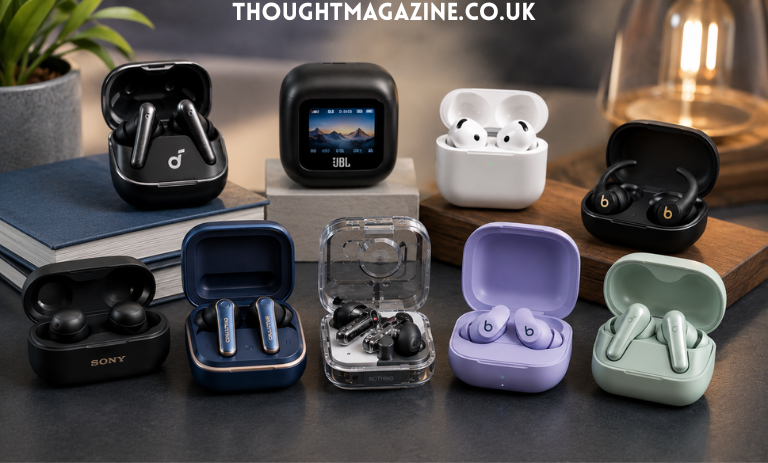
The best wireless earbuds under 200 dollars 2024 represented an important middle ground between basic wireless headphones and expensive flagship models. A $200 spending limit was enough to find active noise cancellation, useful mobile controls, good battery performance, comfortable designs, and sound that could satisfy most everyday listeners. Buyers did not necessarily need to move into the highest price category to get a complete wireless listening experience.
Many of those earbuds did not disappear after 2024. Several continued to be sold through 2025 and into 2026, while manufacturers introduced newer models alongside them. As a result, someone shopping with the same $200 budget in 2026 has a wider selection. Established models can offer better value after price reductions, while newer releases bring updated sound controls, stronger noise management, different driver technology, and additional software features.
Why the $200 Limit Still Makes Sense
There is a point where paying more for wireless earbuds produces smaller improvements. The under-$200 range already includes products designed for commuting, exercise, calls, music, travel, and general daily listening. Most buyers can find the features they actually need without moving into more expensive flagship territory.
The real differences within this range are found in priorities. One pair may concentrate on active noise cancellation while another puts greater emphasis on audio reproduction. Some are built around exercise stability, and others work particularly well with a certain phone ecosystem. Looking at these differences is more useful than assuming the most expensive pair will automatically be the best.
Anker Soundcore Liberty 4 Pro
Soundcore Liberty 4 Pro are one of the more complete options for buyers who like having control over their listening experience. Rather than offering only a few fixed settings, the earbuds work with an app that provides multiple ways to adjust sound and noise-control behavior.
Their active noise cancellation is particularly useful against the continuous background sounds encountered during commuting and travel. Transparency mode works in the opposite direction, allowing surrounding sound back in when someone needs to speak to another person or remain aware of what is happening nearby.
Soundcore also gave considerable attention to the charging case. It includes additional controls and supports rapid charging, making short charging periods useful when the battery is running low. Not everyone will regularly use the case controls, but they add something different to an otherwise practical pair of earbuds.
For someone buying in 2026, the Liberty 4 Pro make sense as an all-round choice. They do not focus exclusively on one type of listener and can instead handle music, travel, calls, and everyday use without requiring the full $200 budget.
JBL Live Beam 3
JBL Live Beam 3 take the idea of an advanced charging case further. The case includes a touch display that can be used to manage playback and listening functions without reaching for the connected phone every time.
The earbuds themselves have a sound profile aimed at mainstream listening, with noticeable energy in the lower and higher parts of music. Users who prefer something different are not restricted to the standard presentation because several EQ choices are available.
Noise cancellation adds another reason to consider the Live Beam 3 for travel. Constant environmental sounds can be reduced while transparency functionality allows outside audio through when required. This gives the user the ability to move between isolation and awareness without removing the earbuds.
The Live Beam 3 are especially suitable for buyers who enjoy additional technology and controls. The smart case will not be necessary for everyone, but it helps separate them from the many earbuds that otherwise offer similar core features.
Apple AirPods 4 With ANC
AirPods 4 with ANC are unusual because Apple introduced noise cancellation without switching to the silicone-tip design commonly associated with ANC earbuds. The open shape is intended for listeners who prefer earbuds that do not create a tight seal inside the ear.
This approach gives AirPods 4 a different type of comfort but also creates a compromise. Outside sound can enter more easily than it can through tightly sealed in-ear earbuds. The active noise cancellation helps reduce distractions, although buyers wanting maximum isolation may still prefer a traditional silicone-tip design.
Apple also combines noise control with adaptive listening functions. The earbuds can change how much environmental sound reaches the listener depending on the situation, while conversation-related features make it easier to interact with people without constantly managing playback manually.
For iPhone owners, integration remains one of the strongest reasons to choose them. Pairing and switching between compatible Apple products is straightforward, and additional Apple-specific audio features are available. Android users can still use the earbuds for basic listening, but they do not receive the same complete experience.
Standard Apple AirPods 4
The regular AirPods 4 provide a less expensive option for people who like Apple’s open fit but do not require active noise cancellation. They are better suited to home listening, offices, walks, podcasts, and other situations where blocking environmental sound is not the main requirement.
Their open design also allows users to remain naturally aware of their surroundings. That can be useful for people who feel uncomfortable when conventional earbuds isolate them too heavily.
For Apple device owners, the standard AirPods 4 can therefore represent better value than paying extra for ANC that may rarely be used. People living or traveling regularly in noisy environments, however, will probably benefit more from the ANC version or a sealed alternative.
Sony WF-C710N
Sony WF-C710N are aimed more directly at listeners who want to control outside noise. They combine silicone ear tips with active electronic noise cancellation, allowing physical isolation and ANC to work together.
This approach makes them useful on public transport, during flights, or in rooms where repetitive background sound makes concentration difficult. The accompanying software also allows users to make changes to sound and listening modes rather than relying entirely on automatic settings.
Battery endurance is another practical part of the package. The earbuds can handle long periods of listening before returning to their case, while the case extends the overall time available between full charges.
The WF-C710N do not concentrate heavily on advanced Bluetooth codecs, so buyers focused on specialized wireless audio formats may prefer alternatives. For everyday listeners who prioritize ANC, comfort, and battery life, however, Sony provides a balanced option.
Creative Aurvana Ace 3
Creative Aurvana Ace 3 take a more audio-focused approach. Their driver arrangement combines xMEMS technology with a conventional dynamic driver, allowing different components to contribute to different sections of the sound.
The result is intended to provide clarity through vocals and higher frequencies while maintaining enough low-end presence for bass-heavy music. This makes the Ace 3 particularly interesting for people who listen carefully to their music rather than treating earbuds mainly as a convenience accessory.
Creative also includes personalized listening technology. Instead of assuming that every person hears frequencies in exactly the same way, the software can create a profile based around the listener’s hearing response.
The main compromise is that noise cancellation is not necessarily the reason to choose these earbuds. Other products are more focused on maximum isolation. The Aurvana Ace 3 make greater sense when sound reproduction and audio customization sit above ANC on the priority list.
Nothing Ear (3)
Nothing Ear (3) combine comfort, sound controls, and distinctive hardware into an option that remains below $200. Their shape is designed to sit securely without relying on additional wings, while several silicone-tip sizes help users find an appropriate seal.
The Nothing X app plays an important role in the experience. Casual listeners can make straightforward changes to the sound, while more experienced users have access to deeper equalizer controls. This is valuable because a bass-heavy factory sound will not suit every type of music or every listener.
The earbuds also provide useful connectivity features for people who regularly use more than one device. Higher-quality Bluetooth audio is available for compatible hardware, while a low-latency mode can be useful when gaming.
One of the more unusual additions is a microphone system built into the charging case. It can be used for voice recording and certain communication tasks. The idea is different, although many buyers will probably spend more time using the earbuds’ normal functions than holding the case during calls.
Beats Fit Pro
Beats Fit Pro remain relevant because they address something specifications often overlook: keeping earbuds securely inside the ears during movement. Their flexible wings provide extra support, making them particularly suitable for workouts and running.
Noise cancellation is included for situations where users want fewer distractions, while a transparency option provides environmental awareness when required. Physical controls can also be useful during exercise because they are easier to operate without carefully positioning a finger on a small touch-sensitive area.
Battery performance is sufficient for most individual workouts and daily listening sessions, with the charging case providing additional power between uses. Splash resistance further supports their role as exercise-focused earbuds.
The Fit Pro work across Android and Apple products, although Apple users receive additional ecosystem features. Their older age means buyers should pay attention to current pricing in 2026. A discounted pair can still be attractive, particularly for someone who values a stable fit more than having the latest generation.
Beats Studio Buds+
Beats Studio Buds+ provide another option for listeners who use different mobile platforms. Instead of being useful only inside Apple’s ecosystem, they provide features for both Android and iPhone owners.
Their design is more conventional than the workout-focused Fit Pro, making them suitable for commuting, music, calls, and ordinary daily listening. Active noise cancellation and surrounding-sound controls cover the functions many buyers now expect in this price range.
They are particularly worth considering when discounted. Newer earbuds have increased competition considerably, so the Studio Buds+ become more attractive when their selling price falls well below the $200 ceiling.
Soundcore Liberty 4 NC
Soundcore Liberty 4 NC are another established pair that can continue to make sense in 2026. Their main attraction is active noise cancellation at a price below many premium alternatives.
They also provide substantial EQ flexibility through Soundcore’s software. This is important for buyers who want to change bass or other frequencies instead of being forced to accept the original tuning.
The Liberty 4 NC are particularly interesting when found below their original price. Newer Soundcore products may offer additional features, but buyers who mainly need ANC and customizable sound can save money by choosing the older model.
Soundcore Space A40
The Space A40 demonstrate that a buyer with a $200 limit does not have to spend anywhere near the full amount. They combine ANC and numerous sound controls at a significantly lower price.
They can serve well as everyday commuting earbuds or as a second pair kept in a work or travel bag. Their lower cost also makes them easier to replace than premium earbuds if they are lost or damaged.
Someone seeking the latest hardware may look elsewhere, but buyers interested primarily in practical value can still find a reason to consider them in 2026.
CMF Buds Pro 2
CMF Buds Pro 2 occupy an even lower section of the market while still offering features commonly associated with more expensive earbuds. They provide active noise cancellation and useful sound performance at a budget-friendly price.
They are not intended to compete with every aspect of a $180 pair. Differences can appear in refinement, microphones, materials, and other details. Their value comes from giving ordinary listeners many of the features they need for much less money.
For students or buyers purchasing their first pair of noise-canceling earbuds, the Buds Pro 2 can therefore be a sensible starting point.
CMF Buds 2 Plus
CMF Buds 2 Plus continue the idea that modern wireless audio does not need to approach $200. They provide another affordable route for people who want personalized listening features and capable everyday audio.
Their place in a 2026 buying guide is important because the under-$200 category has become extremely broad. A buyer can spend close to $200 for premium features or stay below $100 and still receive a functional set of modern earbuds.
That means shoppers should establish what they actually need before setting a target price.
Nothing Ear (a)
Nothing Ear (a) sit below the company’s higher-positioned earbuds while retaining many of the characteristics that make the brand appealing. They provide a modern design, useful app support, and enough functionality for normal music and commuting.
They do not need to outperform Nothing’s more expensive models to justify their existence. Instead, they provide an alternative for someone who likes the general experience but does not require every premium feature.
For buyers trying to stay around $100 rather than $200, Ear (a) can be more financially sensible than purchasing a more expensive pair whose additional functions may go unused.
OnePlus Buds Pro 3
OnePlus Buds Pro 3 sit much closer to the $200 ceiling. They combine modern wireless features with a more premium approach and are particularly relevant for Android users.
OnePlus phone owners are likely to receive the most natural experience because hardware and software from the same company can work together more closely. Other Android users can still use them, but checking feature compatibility is sensible before purchasing.
Their position illustrates how the upper end of the $200 category has changed. Buyers paying close to the maximum should expect more than basic ANC and wireless playback because those features are now widely available for much less.
Google Pixel Buds A-Series
Google Pixel Buds A-Series take a simpler approach. They are particularly suited to Pixel and Android users who want convenient wireless listening without a complicated list of premium functions.
Their sound works well for everyday content, including spoken material such as audiobooks and podcasts. Bass adjustment also gives listeners some room to change the presentation for music.
They are not designed around having the most advanced noise cancellation or extensive hardware features. Their appeal is simplicity and Android integration at a more accessible price.
JBL Tune Buds
JBL Tune Buds offer another lower-cost route into true wireless listening. Their usefulness depends heavily on achieving a proper fit because the seal affects both sound and environmental isolation.
When they sit correctly, they provide a practical mixture of sound controls and everyday features. They are appropriate for listeners who want JBL’s approach without paying for the more elaborate Live Beam 3.
Their lower price also makes them worth comparing against older premium earbuds that have received discounts.
Moondrop Space Travel
Moondrop Space Travel demonstrate just how low the entry price for functional wireless earbuds has become. They cost far less than the $200 maximum yet still provide everyday wireless audio and active noise cancellation.
They naturally involve compromises compared with expensive alternatives. A product at this price should not be expected to provide the same overall refinement as models costing several times more.
Their importance is value. Someone who needs inexpensive earbuds for occasional travel, videos, or backup use may have little reason to spend another $100 or more.
SoundPEATS Capsule3 Pro+
SoundPEATS Capsule3 Pro+ are another sound-oriented alternative for people willing to move beyond the largest mainstream brands. Like Creative’s newer earbuds, they use xMEMS driver technology.
This makes them particularly interesting to listeners who care about audio hardware but still want to remain below $100. They demonstrate that unusual driver technology is no longer reserved exclusively for expensive products.
They may not provide the ecosystem convenience associated with Apple, Google, or OnePlus, but they can be an interesting choice for buyers who put sound and value ahead of brand integration.
What Makes a Good Under-$200 Earbud in 2026?
The standards have increased since 2024. Active noise cancellation alone is no longer enough to make an earbud exceptional because ANC can now be found at many different prices.
A strong 2026 product should combine several qualities. Comfortable fit, reliable Bluetooth, practical battery life, useful controls, acceptable microphones, and stable software matter during everyday use. ANC, premium codecs, spatial audio, and detailed EQ controls can then be considered according to personal requirements.
Sound Quality or Noise Cancellation?
Not every buyer should prioritize the same feature. Someone listening mostly at home may gain more from better sound than extremely strong ANC. A commuter traveling on trains every day may reach the opposite conclusion.
Creative’s Aurvana range is more interesting for sound-focused listeners, while Sony’s WF-C710N are better aligned with users concerned about environmental noise. Soundcore and JBL products generally try to provide a broader combination of both.
Choosing according to where the earbuds will actually be used prevents buyers from paying extra for features that rarely benefit them.
Battery Life Matters Beyond the Advertised Number
Wireless-earbud battery figures should always be considered in context. Total battery life usually includes several recharges from the case rather than one uninterrupted listening session.
ANC, higher listening volumes, calls, and advanced audio functions can also increase power consumption. Someone who listens for only an hour or two each day may not notice the difference, while travelers and people working long shifts should pay more attention to continuous playback.
Battery condition also matters when purchasing older 2024-era products in 2026. Buying a new pair from reliable stock is generally preferable to purchasing heavily used earbuds with batteries that may already have lost capacity.
Final Thoughts
The best wireless earbuds under 200 dollars 2024 created a strong group of products that did not simply disappear when the calendar moved forward. Several choices associated with that period remain available and useful in 2026, including AirPods 4, JBL Live Beam 3, Soundcore Liberty 4 NC, Beats Fit Pro, Beats Studio Buds+, Nothing Ear, and several lower-cost alternatives.
Newer products have expanded the selection rather than completely replacing those earlier choices. Soundcore Liberty 4 Pro, Sony WF-C710N, Creative Aurvana Ace 3, Nothing’s newer options, and recent OnePlus earbuds give 2026 shoppers additional ways to spend the same budget. An older model can be the better deal when discounted, while a newer pair can justify its price through improved features or a better match for the user’s needs. The strongest purchase under $200 ultimately depends on whether the buyer values sound, ANC, exercise stability, battery life, customization, or ecosystem compatibility most.