
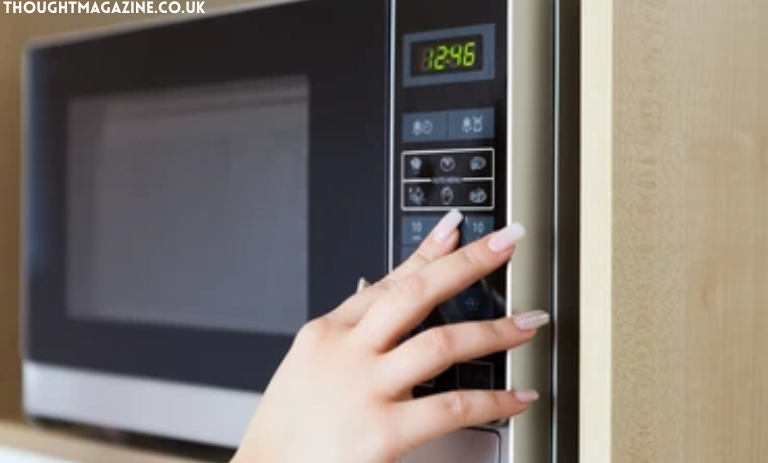
Microwey is a casual term sometimes used for a microwave oven, the familiar kitchen appliance designed to heat and prepare food quickly. It has become useful for much more than warming yesterday’s dinner. Depending on the model, it can defrost frozen ingredients, cook vegetables, prepare simple meals, melt ingredients, and even grill or bake food.
The main reason people rely on a microwey is convenience. Traditional cooking often involves preheating an oven or using several pans, whereas many microwave tasks can be completed in a single container within minutes. However, understanding the appliance is important because different microwave types, power settings, containers, and cooking methods can produce very different results.
What Is a Microwey?
A microwey is essentially an enclosed electric appliance that uses microwave-frequency electromagnetic energy to heat food. Instead of producing heat through a flame, hot coil, or heated oven chamber, it generates microwave energy and directs it into the cooking compartment.
The term “microwey” itself is informal rather than an official appliance category. In everyday use, it generally refers to the same machine normally called a microwave or microwave oven. Modern versions are available in different sizes and configurations, ranging from simple countertop models to combination appliances with grilling and convection functions.
A Brief History of Microwave Cooking
Microwave cooking developed from technological work carried out during the 1940s. Engineer Percy Spencer is widely associated with the discovery that microwave energy used in radar technology could also heat food. Experiments eventually led to machines specifically designed for food preparation.
Early microwave ovens were very different from the compact appliances found in kitchens later on. They were large and expensive, which limited their practical use. As components became smaller and manufacturing methods improved, companies were able to produce domestic microwave ovens that required less space and were easier for ordinary households to operate.
How Does a Microwey Work?
The working process begins when electricity powers a component known as a magnetron. In a conventional microwave oven, the magnetron produces microwave-frequency electromagnetic energy. This energy is directed through the appliance and into the metal cooking chamber containing the food.
Once microwave energy reaches food, it interacts strongly with polar molecules and ions, with water playing a major role in many foods. The changing electromagnetic field causes molecular movement and interactions that generate heat. Because the energy can penetrate beneath the immediate food surface to some extent, microwave heating can be faster than methods that depend entirely on heat gradually moving inward from the outside.
A microwey does not simply cook everything “from the inside out,” however. Microwave penetration is limited, especially in thick or dense foods. Heat must still travel from warmer areas toward cooler ones. That explains why a large serving may have very hot edges while its center remains cooler.
Main Parts of a Microwey
Although designs vary, conventional microwave ovens contain several important components. The magnetron generates microwave energy, while a waveguide helps direct that energy toward the cooking chamber. The metal cavity keeps the cooking process contained within the appliance.
Many models include a rotating glass turntable to move food through different areas of the microwave field. The control panel manages time, power, and programmed settings. Door interlocks are another important component because they are designed to stop microwave generation when the door is opened.
These parts work together every time the appliance operates. More advanced models may add heating elements, convection fans, sensors, inverter electronics, and automated cooking controls.
Types of Microwey
Microwave ovens are not all designed for exactly the same purpose. The simplest option is a solo microwave, which concentrates mainly on microwave heating. It is well suited to reheating meals, warming drinks, defrosting frozen ingredients, and performing straightforward cooking jobs.
A grill microwave combines normal microwave operation with a separate grilling element. The grill can provide surface browning that standard microwave heating alone struggles to produce. This makes it more suitable for foods where a browned or firmer exterior is preferred.
A convection microwave adds a fan and conventional heating system. Hot air can circulate around food in a way that is closer to a traditional oven. Depending on the appliance, users may be able to microwave, bake, roast, or use combinations of different heating methods.
There are also combination microwaves designed to use microwave, grill, and convection functions together or separately. These machines can be useful in smaller kitchens where one appliance is expected to handle several cooking methods.
Countertop Microwey
Countertop models are among the easiest microwave ovens to install. They sit on a suitable kitchen counter or shelf and usually require little more than access to the correct electrical outlet and adequate ventilation space according to the manufacturer’s instructions.
They are available in many capacities and power levels. Smaller versions can work well in offices, student accommodation, or compact kitchens, while larger countertop models can accommodate bigger plates and cooking containers.
The major disadvantage is the counter space they occupy. In a small kitchen, even a medium-sized microwave can take up an area that might otherwise be needed for food preparation.
Built-In Microwey
A built-in microwave is installed within kitchen cabinetry rather than simply sitting on the counter. This arrangement can free up worktop space and provide a more integrated kitchen layout.
Installation requirements are more important with these machines. A microwave should not simply be placed inside a closed cabinet unless its design and installation instructions specifically allow it. Ventilation and clearance requirements need to be followed to prevent overheating and other operating problems.
Built-in models can also be more difficult to replace than freestanding countertop machines because dimensions and cabinetry may affect which replacement appliance will fit.
Over-the-Range Microwave
Over-the-range microwaves are commonly installed above a cooking range, particularly in kitchens where counter space is limited. They combine microwave cooking with a ventilation system intended to deal with cooking fumes and steam from the stovetop below.
This arrangement saves space, but installation is more complicated than placing a countertop microwave on a work surface. Height, mounting, electrical connections, ventilation configuration, and clearance from the cooking surface all need consideration.
Common Uses of a Microwey
Reheating is one of the most frequent microwave uses, but the appliance can handle several other everyday kitchen tasks. Appropriate applications depend on the food, cookware, and specific microwave model.
Common uses include:
- Reheating cooked meals and leftovers
- Warming soups, sauces, and suitable drinks
- Defrosting frozen food
- Steaming certain vegetables
- Preparing oatmeal and other simple dishes
- Cooking potatoes and other suitable foods
- Melting butter or chocolate carefully
- Softening certain ingredients
- Heating ready-made meals
- Preparing microwave-specific recipes
- Warming individual portions
- Grilling or baking when the appliance supports those functions
The microwave is particularly useful for smaller portions because users do not normally need to preheat a large oven just to warm one plate.
Reheating Food Properly
Although reheating seems simple, placing food inside for several minutes at maximum power does not always give the best result. Uneven food thickness and different moisture levels can create hot and cold areas.
Spreading food evenly across the plate can help. Thick pieces may benefit from being positioned toward the outside, depending on the dish and microwave instructions. Soups, sauces, curries, and similar foods can often be stirred during heating to distribute heat.
Covering suitable food with a microwave-safe cover can also reduce splashing and help retain moisture. After heating, allowing the meal to stand briefly can give heat more time to move through cooler sections.
Using a Microwey for Defrosting
Frozen ingredients can take considerable time to thaw in a refrigerator. A microwave’s defrost setting provides a faster alternative when food needs to be prepared relatively soon.
Defrost programs generally use reduced or controlled power to limit cooking while the frozen food thaws. Users may need to turn larger pieces, separate smaller pieces as they loosen, or pause the program at intervals.
Care is particularly important with raw animal products. Microwave defrosting can cause some areas to become warm enough to begin cooking while others remain partly frozen, so appropriate food-safety practices and subsequent cooking instructions should be followed.
Benefits of Using a Microwey
One major benefit is speed. Small quantities of food can often be heated much faster than they could be in a conventional oven. Because there is usually little or no preheating time, the appliance can be convenient for quick meals.
Another benefit is simple operation. Basic models require users to choose little more than time and power. Modern machines may also provide automatic programs for common foods.
A microwey can also reduce the amount of cookware required for certain meals. Food can sometimes be prepared, heated, and served from the same microwave-safe dish, reducing the number of pots and pans that need washing.
For suitable small tasks, microwave cooking may also use less energy than heating a large conventional oven. The actual advantage depends on the appliance, portion size, cooking duration, and food being prepared.
Why Microwave Food Can Heat Unevenly
Uneven heating occurs partly because microwave energy does not distribute itself perfectly throughout every area of the cooking chamber. Food also varies in thickness, shape, water content, density, and composition.
The rotating turntable helps address this by continually changing the food’s position. Even with a turntable, however, a meal can contain areas that heat at different rates.
Stirring, rearranging, rotating, and allowing standing time can improve consistency. Dense dishes generally require more attention than a small cup of liquid because heat needs additional time to reach their cooler sections.
Understanding Microwave Power Levels
Full power is useful when rapid heating is appropriate, but lower power settings have an important role. Delicate foods may heat more evenly when energy is delivered less aggressively over a longer period.
Reduced settings are useful for jobs such as defrosting, softening butter, melting chocolate, and gently reheating certain foods. In many traditional microwaves, selecting a lower power level causes the magnetron to switch between operating and resting periods.
Some newer inverter models can deliver energy in a more continuous manner at reduced settings. This can provide finer control during delicate heating tasks.
Suitable Containers for Microwey Cooking
Microwave-safe glass and ceramic dishes are widely used because they can handle many common reheating and cooking tasks. Plastic containers should only be used when they are specifically suitable for microwave use and appropriate for the intended temperature and food.
Metal requires caution. Standard metal cookware should not be placed inside an ordinary microwave unless the appliance manufacturer specifically states that it can be used under particular conditions. Metal can reflect microwave energy and may cause arcing in unsuitable situations.
Food containers should also be vented when necessary. Steam pressure can build inside tightly sealed containers during heating, potentially causing the lid or container to open suddenly.
Microwey Safety
The door and locking mechanism are important safety parts of a microwave. Users should not operate a machine with serious damage to the door, hinges, latch, or surrounding structure.
The appliance should also never be operated contrary to the manufacturer’s instructions. Empty operation may damage some microwave ovens because there may be insufficient food or liquid available to absorb the generated energy.
Internal repair is another area requiring caution. Microwave ovens contain electrical components capable of storing or handling dangerous voltages. Opening the casing for DIY electrical repair can therefore present risks even when the appliance has been unplugged.
Foods Requiring Extra Care
Some foods require special preparation before microwave heating. Foods enclosed by a skin or similar outer layer can develop internal steam pressure. Potatoes, for example, are commonly pierced before microwave cooking.
Heating whole eggs in their shells can also create dangerous pressure. Other foods may need venting, stirring, or special containers depending on how they are prepared.
Liquids should be handled carefully as well. A liquid can sometimes become extremely hot without the vigorous bubbling people normally associate with boiling. Moving the container or adding another ingredient can then cause sudden boiling.
Cleaning and Maintaining a Microwey
Food splashes should be cleaned regularly because accumulated grease and residue can become harder to remove over time. A clean interior also makes it easier to identify damage and prevents old food deposits from creating unpleasant smells.
The turntable and its supporting parts can usually be removed for cleaning, although the appliance manual should be checked. The inside walls can generally be wiped with appropriate non-abrasive cleaning materials.
Ventilation openings should remain unobstructed. A microwave depends on airflow to cool its components, so pushing objects against vents or installing the appliance without the required clearance can affect operation.
Microwey Versus Conventional Oven
A microwave and conventional oven solve different cooking problems. A microwey generally performs better when speed is the main priority, especially for reheating individual portions, warming liquids, defrosting, and cooking certain moisture-rich foods.
A conventional oven has advantages when browning, crisping, roasting, or baking is important. Hot air and heated surfaces create textures that a standard solo microwave usually cannot reproduce.
Combination microwave models reduce the difference by adding grill or convection heating. Even then, understanding which cooking mode suits a particular recipe remains important.
Microwey Versus Air Fryer
Microwaves and air fryers are sometimes compared because both are commonly used for quick food preparation. Their cooking methods are substantially different.
A standard microwey is usually faster for heating soups, drinks, sauces, leftovers, and foods where retaining moisture is desirable. An air fryer circulates very hot air around food and is generally better when the goal is a browned or crisp exterior.
Neither appliance is automatically better. A household interested mainly in rapid reheating may benefit more from a microwave, while someone who frequently prepares crisp foods may use an air fryer more often.
Choosing the Right Microwey
The first consideration should be how the appliance will actually be used. A person who only needs to reheat meals and defrost ingredients probably does not need an expensive combination model.
Internal capacity is important because plates and cooking containers need enough room. External dimensions matter just as much, particularly in smaller kitchens. Buyers should measure the intended location rather than relying only on the advertised capacity.
Wattage, control layout, cleaning convenience, turntable size, automatic programs, installation requirements, and available cooking modes can also influence the decision. Features are useful only when they match real cooking habits.
Final Thoughts
Microwey may be an informal name, but the appliance it describes has become a practical part of everyday food preparation. Its ability to rapidly reheat, defrost, and cook suitable foods explains why microwave ovens remain common in homes, workplaces, apartments, and shared kitchens.
Different types offer different capabilities. A solo model handles basic microwave tasks, while grill, convection, and combination models expand the range of foods that can be prepared. Knowing how microwave heating works also helps users understand why stirring, standing time, correct containers, appropriate power levels, and safe handling matter.
The biggest benefits of a microwey are speed, convenience, relatively simple operation, and flexibility for small cooking jobs. It does not replace every traditional cooking method, but when used for the tasks it handles well, it can make everyday food preparation considerably quicker and simpler.