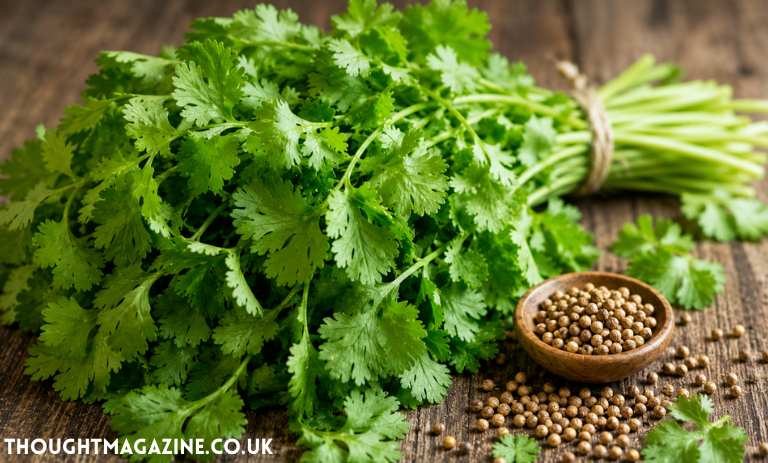
Koriandri is a culinary herb valued for two different parts of the same plant: its green leaves and its dried seeds. Botanically known as Coriandrum sativum, it belongs to the Apiaceae family, which also includes plants such as parsley, carrot, celery, and fennel. Its place in cooking is unusually broad because the fresh and dried forms have noticeably different flavors and are often treated almost like separate ingredients.
Fresh koriandri leaves are generally added for their green, sharp taste, while the seeds provide a warmer and less leafy flavor. This difference allows the plant to appear in everything from fresh sauces and salads to spice mixtures, curries, soups, marinades, and cooked vegetable dishes. The terminology can vary between countries, which sometimes creates confusion, but all these culinary forms come from the same plant.
Where Koriandri Comes From
The precise geographical starting point of coriander is difficult to reduce to a single modern country because the plant has been cultivated for a very long time. It has historical associations with the Mediterranean region, parts of North Africa, and western and southern areas of Asia. Centuries of cultivation and trade eventually carried it far beyond these regions.
Its ability to grow in different climates helped koriandri become established in many agricultural traditions. It is now cultivated in numerous countries for fresh leaves, seeds, or both. In some places, it is mainly a garden herb harvested while young. Elsewhere, farmers allow the plants to mature fully so that the dry fruits commonly called coriander seeds can be collected.
A Herb With a Long Recorded History
Coriander has been known to human societies for thousands of years. References and archaeological discoveries connect it with ancient civilizations around the Mediterranean and nearby regions. Its long history suggests that people recognized early that one relatively simple crop could provide both fresh plant material and a storable seasoning.
As trade routes developed, coriander moved between communities along with other herbs, spices, seeds, and food crops. Different societies incorporated it into their own cooking rather than using it in one fixed way. This helps explain why koriandri is associated with many cuisines that otherwise have very different ingredients and cooking techniques.
Its historical importance also came from practicality. Dried coriander could be stored much longer than fresh leaves and transported without the same risk of rapid spoilage. Seeds therefore had advantages for merchants, cooks, and households that wanted seasonings available outside the fresh growing season.
Why Koriandri Has Several Names
One unusual feature of koriandri is the number of names associated with it. “Coriander” is widely understood internationally, but local terminology varies considerably. In American English, for example, “cilantro” usually means the fresh leaves and stems, while “coriander” generally refers to the dried seeds.
In other English-speaking regions, coriander can describe the whole plant, with phrases such as “coriander leaves” and “coriander seeds” distinguishing the parts. South Asian languages also have their own familiar terms for the herb. These naming differences can make recipes appear to call for different plants when they are actually referring to Coriandrum sativum.
Understanding the distinction is especially useful when following international recipes. If a dish requests fresh cilantro, it normally means the leafy portion. Ground coriander, by contrast, refers to dried seeds that have been processed into a powder.
Understanding the Koriandri Plant
Koriandri is generally grown as an annual, completing its life cycle within a single growing season. Young plants produce soft green leaves that are harvested for food. As the plant develops, its growth pattern changes and it eventually produces flowers followed by small round fruits.
The leaves lower on the plant tend to be broader, while later growth may appear finer and more divided. This changing leaf shape is a normal part of the plant’s development. Once flowering begins, leaf production for culinary harvesting becomes less important and the plant directs more energy toward reproduction.
After pollination, the fruits develop and gradually dry. These small round structures are what cooks commonly call coriander seeds. They can be kept whole or ground before use. Their flavor differs substantially from that of the fresh leaves.
What Does Koriandri Taste Like?
Describing koriandri with a single flavor is difficult because the leaves and seeds offer different experiences. Fresh leaves have a strong green aroma and a flavor that can seem citrus-like or slightly peppery. They are usually most noticeable when added near the end of cooking or served raw.
Coriander seeds are more restrained. Once dried, they develop warm, lightly citrus-like and earthy notes. Toasting them briefly can change their aroma further, which is why whole seeds are often heated before being crushed or ground for certain recipes.
People also perceive fresh coriander differently. Some enjoy its sharp freshness, while others find the leaves unpleasant and describe the flavor as soapy. This difference in perception is one reason koriandri can be a surprisingly divisive herb despite its widespread culinary use.
Fresh Leaves in Everyday Cooking
Fresh koriandri is frequently used when a dish needs a final herbal element rather than another long-cooked ingredient. The leaves may be chopped and scattered over curries, lentils, rice, grilled foods, soups, beans, vegetables, and meat dishes shortly before serving.
It can also become a central ingredient rather than a garnish. Green chutneys, herb sauces, dips, relishes, and marinades can contain substantial quantities of coriander leaves. Combining the herb with ingredients such as chili, citrus juice, garlic, yogurt, tomato, or onion produces sauces with very different applications.
Because heat reduces some of the fresh aroma, many cooks add the leaves late. This is not a strict rule, however. Stems and leaves may both be incorporated earlier when a recipe is intended to build the herb into the overall flavor.
Using the Stems Instead of Discarding Them
The stems of fresh koriandri are edible and can be useful in cooking. Tender stems carry considerable flavor and can be chopped together with the leaves for sauces, curries, marinades, and other preparations.
Using the stems also reduces kitchen waste. Rather than removing every stalk, cooks can separate only the tougher lower portions when necessary. Finely chopped tender stems work particularly well in foods where their texture will not be noticeable.
The roots are also used in some culinary traditions. Where available, coriander roots may be crushed into seasoning pastes. Their use demonstrates that almost every major part of the plant can have a culinary purpose.
Koriandri Seeds as a Spice
Once koriandri reaches maturity, the seeds provide an entirely different ingredient. Whole coriander seeds can be added to pickling mixtures, spice blends, soups, stews, and marinades. They can also be crushed to release more aroma.
Ground coriander is particularly common in spice-based cooking. It blends easily with cumin, turmeric, chili, pepper, and other seasonings. Rather than dominating a dish, it often contributes a background flavor that helps connect stronger spices.
Freshly grinding whole seeds can produce a stronger aroma than using powder that has been stored for a long period. Ground spices expose more surface area to air, causing their aromatic compounds to decline faster. For this reason, some cooks keep whole seeds and grind small amounts as needed.
Koriandri in South Asian Food
Koriandri has a major place in South Asian kitchens. Fresh leaves are commonly used with curries, lentil dishes, rice, chaat, kebabs, vegetables, and chutneys. They are often scattered over prepared food shortly before serving, providing freshness against cooked spices and richer ingredients.
The seeds are equally important. Ground coriander appears in numerous spice combinations and is often paired with cumin. Whole seeds may be toasted or crushed depending on the recipe. Because both forms are readily useful, households may keep fresh coriander and dried coriander powder as separate everyday ingredients.
Green coriander chutney is another familiar preparation. Recipes vary by household and region, but the basic idea usually involves blending fresh leaves with other strongly flavored ingredients. The result can accompany snacks, grilled foods, sandwiches, fried dishes, and full meals.
Role in Middle Eastern and Mediterranean Cooking
Across Middle Eastern and Mediterranean cuisines, coriander appears in a variety of forms. Seeds can contribute to seasoning mixtures, while fresh leaves are incorporated into salads, sauces, vegetable preparations, and dishes built around legumes or meat.
Its role changes from one country to another. Some culinary traditions depend more heavily on the dried spice, while others make greater use of fresh leaves. Historical movement between North Africa, the Mediterranean, the Middle East, and Asia contributed to the herb’s broad distribution.
Rather than belonging to one cuisine, koriandri is better understood as an ingredient that different cultures adapted to local cooking practices.
Cilantro in Latin American Cuisine
In many parts of the Americas, particularly in recipes influenced by Latin American traditions, the fresh herb is commonly called cilantro. It may be added to salsa, beans, rice, soups, tacos, meat preparations, and fresh condiments.
The leaves work well with lime, tomato, chili, avocado, and onion, explaining their frequent appearance in fresh preparations. Since these dishes often depend on a balance between acidity, heat, richness, and freshness, cilantro can have a noticeable effect even when used in modest amounts.
This usage also highlights the importance of regional vocabulary. A recipe written in the United States may use “cilantro,” while a similar recipe from another English-speaking country might simply say “fresh coriander.”
Nutritional Profile of Fresh Koriandri
Fresh coriander leaves contain several micronutrients and plant compounds. They can contribute vitamin K along with smaller quantities of other vitamins and minerals. However, the nutritional contribution of a normal serving depends heavily on how much is actually eaten.
Since koriandri is often consumed as a garnish rather than in large portions, it should not be viewed as a replacement for vegetables or other major components of a balanced diet. Its main purpose in most meals remains culinary.
The seeds have a different nutritional composition because they are dried and usually eaten in smaller quantities. They contain dietary fiber and various naturally occurring compounds, but typical spice portions are limited. Claims about coriander should therefore distinguish between its value as a food ingredient and stronger medical claims that require appropriate scientific evidence.
Koriandri and Traditional Medicine
Coriander has appeared in traditional health practices in different regions for generations. Leaves, seeds, and preparations made from them have historically been associated with digestion and other everyday complaints.
Traditional use, however, does not automatically establish a treatment as medically effective. Modern research has examined compounds found in coriander and explored possible biological effects, but results from laboratory studies or small investigations should not be treated as proof that ordinary culinary coriander can prevent or cure disease.
For everyday consumers, the most established role of koriandri is as a food and seasoning. Anyone considering concentrated coriander products or supplements for a medical purpose should treat them differently from the small quantities normally used in meals.
How Koriandri Is Grown
Koriandri can be grown in gardens, containers, and agricultural fields. Seeds are generally planted directly into soil because the developing roots can be sensitive to unnecessary disturbance. The plants perform best when they receive suitable light, adequate moisture, and soil that drains properly.
Growers interested mainly in leaves often sow smaller batches at intervals. This provides repeated young growth instead of relying on one planting that eventually flowers. Hot conditions can encourage the plant to move more quickly toward flowering and seed production, a process commonly called bolting.
For seed production, flowering is desirable. The plant is left to mature until the fruits develop and begin drying. They can then be harvested and dried further before storage.
Harvesting Fresh Leaves
Young outer leaves can be cut as the plant develops, allowing the center to continue producing growth. Harvesting regularly may provide a steady supply during the productive stage.
Once flower stalks appear, the character of the plant changes. Gardeners who mainly want leaves may replace older plants with younger sowings. Those interested in seeds can simply allow selected plants to complete their natural cycle.
Freshly harvested coriander should be handled carefully because the leaves lose moisture relatively quickly. Washing is useful before consumption, but excess surface water during storage can encourage deterioration.
Storing Fresh Koriandri
Fresh koriandri has a limited storage life, particularly if it is left warm or excessively wet. Refrigeration helps slow deterioration. Depending on the storage method, the herb can be wrapped with controlled moisture or kept upright with the stem ends in a small amount of water.
The important goal is to prevent both dehydration and excessive dampness. Completely wet leaves can become slimy, while uncovered leaves may wilt quickly.
It is often better to wash only the amount required immediately, especially when longer storage is planned. If the entire bunch is washed, drying it thoroughly before refrigeration can help maintain its condition.
Storing Whole and Ground Coriander
Dried coriander seeds are much easier to keep than fresh leaves. They should be stored in a sealed container away from excessive heat, moisture, and direct sunlight. A dry cupboard is generally suitable.
Whole seeds usually retain their aroma longer than ground coriander. Grinding breaks the seed into smaller particles and exposes more of it to oxygen, gradually reducing its aromatic strength.
Keeping both forms can still be convenient. Ground coriander is quick to measure during everyday cooking, while whole seeds are useful for roasting, crushing, pickling, and preparing fresh spice mixtures.
How to Select Fresh Koriandri
When buying fresh koriandri, look for leaves that appear firm and green rather than badly wilted or yellowing. A fresh bunch should have a noticeable herbal smell without signs of decay.
Some damaged leaves do not necessarily make an entire bunch unusable. They can be removed during preparation. The stems should also be checked because soft or decomposing sections may indicate that the bunch has been stored for too long.
If the herb will be used raw, proper washing is particularly important. Rinsing removes visible soil and other material from the leaves and stems before preparation.
Why the Leaves and Seeds Seem So Different
It can be surprising that coriander leaves and coriander seeds come from one plant because they do not taste identical. The reason is that the chemical compounds responsible for aroma change between different plant parts and stages of development.
Young green tissue contains volatile compounds that create the recognizable smell of fresh coriander. Mature dried fruits have another aromatic balance, resulting in the warmer character associated with coriander spice.
This distinction is important when substituting ingredients. Ground coriander cannot normally replace fresh coriander leaves in equal amounts, and chopped leaves cannot reproduce the flavor of dried seeds. A recipe specifying one form usually has a reason for doing so.
Cooking With Koriandri Successfully
The simplest way to use koriandri effectively is to decide which part of the plant suits the dish. Fresh leaves work best when herbal freshness is required, while dried seeds are more appropriate when the recipe needs a warm spice element.
Timing also matters. Fresh leaves generally preserve more of their recognizable aroma when added toward the end of cooking. Seeds can tolerate longer cooking and may be toasted before use. Ground coriander can be cooked with other spices so its flavor becomes integrated into sauces, stews, and curries.
Quantity depends on the recipe and personal preference. Because fresh coriander can be strong for some people, starting with a smaller amount and adding more is often practical.
Why Koriandri Remains an Important Kitchen Ingredient
Koriandri has remained useful because one plant provides several distinct culinary ingredients. Its leaves can brighten cooked food, its stems can strengthen sauces and pastes, and its dried seeds can become a long-lasting spice.
Its widespread presence also reflects centuries of agricultural movement and culinary exchange. Communities across Asia, the Middle East, Europe, Africa, and the Americas have incorporated coriander into foods in their own ways. As a result, the plant does not have one universal culinary identity.
For home cooks, its practical value is straightforward. Fresh koriandri can change the final character of a meal with minimal preparation, while dried coriander can remain in the spice cupboard for repeated use.
Conclusion
Koriandri, or Coriandrum sativum, is an annual herb whose leaves, stems, roots, and dried seeds can all serve culinary purposes. Fresh leaves, often called cilantro in North America, have a strong green flavor, while dried coriander seeds provide a warmer spice profile. These differences make the plant useful across a wide range of recipes.
Its long history and presence in numerous regional cuisines show how successfully coriander has moved between cultures while taking on different names and uses. Whether chopped over a finished curry, blended into chutney, added to salsa, or ground into a spice mixture, koriandri remains valued primarily because of its versatility in everyday cooking.