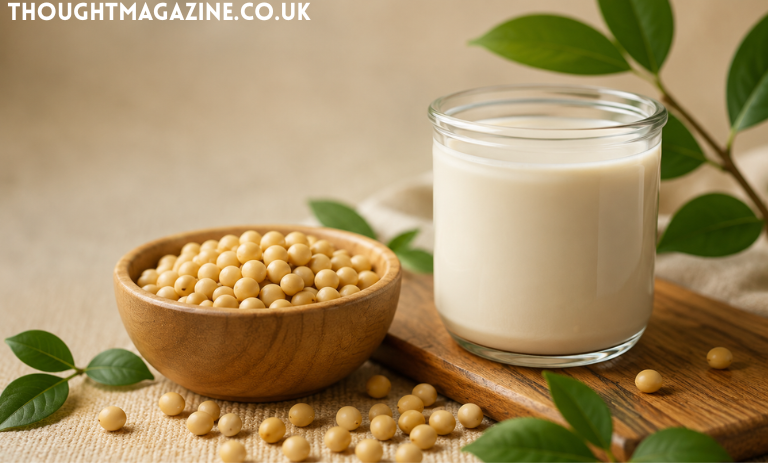
Soy has been part of human diets for centuries, particularly across China, Japan, Korea, and other parts of Asia. Foods made from soybeans have developed into many forms, including tofu, tempeh, miso, soy milk, and fermented sauces. One reason for soy’s long-standing use is its nutritional value. It provides plant protein and can be adapted to different meals without relying on animal-derived ingredients.
Insoya represents a newer approach to using soy as a nutritional food source. Rather than simply processing soybeans into another conventional soy product, the concept centers on improving the way soy is prepared, digested, and nutritionally used by the body. Fermentation, carefully selected soybeans, and additional nutrients are brought together to address some of the issues commonly associated with standard soy products. The result is intended to retain the useful qualities of soy while making it better suited to changing dietary expectations.
How Insoya Differs From Conventional Soy
Regular soy products can vary considerably depending on how the beans are grown and processed. Some undergo minimal preparation, while others are heavily processed before reaching consumers. Insoya takes a more controlled approach in which the treatment of the soybean is considered an important part of its nutritional purpose.
The main difference is the emphasis on fermentation and nutrient improvement. Instead of relying only on the nutrients naturally present in soybeans, the Insoya concept involves processing methods designed to improve digestibility and nutritional availability. Non-GMO and organically produced soybeans may also form part of this approach, reflecting consumer interest in ingredient sourcing and food production methods.
Why Fermentation Matters
Fermentation has been used in food preparation for generations, long before modern food science began studying its effects. Traditional foods such as tempeh, miso, and natto demonstrate that soybeans can be transformed substantially through fermentation. The process changes the composition of the original ingredient as microorganisms interact with compounds found in the food.
Insoya builds on this established principle with a more targeted fermentation process. Probiotic microorganisms can help break down certain complex components before the food is consumed. This means some of the work that would normally take place during digestion has already begun during production. Such processing can influence texture, flavor, and the way nutrients become available after consumption.
Addressing Anti-Nutrients in Soybeans
One concern surrounding plant-based foods is the presence of naturally occurring compounds commonly described as anti-nutrients. Soybeans contain substances such as phytates, which can bind with certain minerals and affect their absorption. This does not automatically make soy unhealthy, but processing methods can influence how much of these compounds remain in the finished food.
Fermentation is one method used to reduce the effects of some anti-nutritional compounds. By allowing microorganisms and enzymes to act on the soybean, certain complex substances can be broken down or reduced. Insoya uses this principle as part of its effort to make soy nutrients easier for the body to access.
A Focus on Better Digestibility
People do not always respond to soy products in the same way. Some can eat tofu or soy milk regularly without problems, while others may experience gas, bloating, or general digestive discomfort. These reactions can depend on the individual, the amount consumed, and the type of soy product involved.
The processing behind Insoya is intended to make soy easier to digest by modifying some of its harder-to-process components through fermentation. Breaking down certain carbohydrates and other compounds before consumption may reduce the digestive workload associated with an untreated soybean product. However, individual responses can still vary, and fermentation should not be considered a guarantee that every person will tolerate soy equally well.
Protein Remains at the Center
Protein is one of the main reasons soy has become important in plant-based diets. Unlike many plant foods that provide relatively small amounts of protein, soybeans naturally contain substantial protein and supply essential amino acids needed for normal body functions.
Insoya keeps protein at the center of its nutritional identity while attempting to improve how the food is processed. Fermentation can partially break larger proteins into smaller components, including peptides and amino acids. This transformation is one reason fermented proteins have attracted interest in food research, particularly when manufacturers are trying to develop plant-based foods that combine nutrition with easier digestion.
Adding Important Micronutrients
Protein alone does not determine whether a food provides balanced nutrition. People following vegetarian or vegan eating patterns also need to pay attention to micronutrients that can sometimes be harder to obtain in adequate quantities from plant foods alone. Vitamin B12 is an important example because dependable natural plant sources are limited.
Insoya may address this issue through nutritional enrichment. Vitamin B12, iron, and omega-3 fatty acids can be incorporated to broaden the nutritional value beyond the soybean’s original composition. This approach turns the product into more than a straightforward protein source and can help it serve a wider nutritional purpose.
The Role of Vitamin B12
Vitamin B12 supports normal red blood cell formation, neurological function, and other essential processes in the body. Because it is primarily associated with animal-derived foods and fortified products, people eating completely plant-based diets generally need to obtain it through fortified foods or supplementation.
Including B12 in an enhanced soy product can therefore have practical value. Rather than expecting consumers to receive every nutrient naturally from the soybean itself, fortification acknowledges that plant-based eating sometimes requires deliberate nutritional planning. Insoya’s broader concept reflects this approach by combining soy’s existing nutrients with selected additions.
Iron and Plant-Based Eating
Soybeans naturally provide minerals, including iron, but the amount present in a food is only part of the nutritional picture. The body also has to absorb that mineral. Plant-based iron is generally present as non-heme iron, and its absorption can be influenced by other components of the meal.
Reducing phytates through fermentation may support improved mineral availability, although absorption still depends on the overall diet and individual circumstances. When iron is additionally included as part of nutritional enrichment, the final product can provide another dietary source for people who are intentionally reducing their consumption of animal foods.
Incorporating Omega-3 Fatty Acids
Omega-3 fatty acids are another area of interest in modern plant-based nutrition. They are associated with several important biological functions, but their dietary sources and forms vary. People avoiding fish often look for plant-derived alternatives to meet their nutritional requirements.
Adding an omega-3 component to a soy-based food creates a broader nutrient profile. This illustrates how Insoya differs conceptually from ordinary soybeans: the objective is not merely to preserve what is naturally present but to develop a food that brings several nutritional priorities together in one product.
Improving the Taste Experience
Nutrition is important, but people are unlikely to continue eating a product if they dislike its flavor. Conventional soy foods can sometimes have a noticeable bean-like or relatively plain taste. While many consumers are accustomed to it, others find that flavor difficult to incorporate into their everyday meals.
Fermentation can modify these characteristics by changing the compounds responsible for taste and aroma. Depending on the production method, it may produce a more developed flavor and reduce some of the raw soybean notes. This could allow Insoya to be incorporated into a wider range of recipes rather than being limited to traditional soy-based dishes.
Texture and Food Applications
Texture is another important consideration when developing alternatives to animal-based foods. A soy ingredient that works well nutritionally may still have limited appeal if its texture does not suit the food being produced. Food scientists therefore examine how protein processing affects firmness, moisture retention, smoothness, and other physical properties.
The processing approach associated with Insoya could make it suitable for different food formats. Depending on how the finished ingredient is manufactured, applications could potentially range from protein-focused foods and meat alternatives to beverages, snacks, or prepared meals. Its usefulness ultimately depends on how effectively producers can adapt it without losing its nutritional characteristics.
Insoya and Plant-Based Diets
The expansion of plant-based eating has created demand for ingredients that do more than simply replace meat or dairy. Consumers increasingly expect alternatives to provide meaningful nutrition rather than functioning only as substitutes in appearance or taste.
Insoya fits into this shift by treating soy as a foundation that can be improved rather than merely copied into familiar food shapes. Its protein content makes it relevant for vegetarian and vegan diets, while fermentation and fortification broaden its potential role. It may also appeal to people who are not completely plant-based but want to include more plant-derived protein in their regular meals.
Environmental Considerations
Soybeans are often discussed in debates about agriculture and sustainability. The environmental impact of soy is complicated because cultivation methods, land use, transportation, processing, and the final purpose of the crop all influence its overall footprint. Not all soy production can therefore be treated as environmentally identical.
A more sustainability-focused soy product would need to consider where its beans originate and how they are produced. Using responsibly sourced, non-GMO, or organically cultivated beans can form part of that strategy. Production efficiency is also important because extensive processing can add energy and resource demands. For Insoya to support environmental goals effectively, sustainability must extend across the supply chain rather than stopping at the choice of a plant-based ingredient.
The Importance of Responsible Sourcing
Ingredient sourcing influences both food quality and consumer confidence. Buyers increasingly want to understand where ingredients come from, whether crops are genetically modified, and how agricultural practices affect surrounding ecosystems.
The emphasis on carefully selected soybeans gives Insoya a potential point of distinction from anonymous commodity soy ingredients. Transparent sourcing could allow producers to trace the crop from agricultural suppliers through processing and final manufacturing. This becomes particularly relevant when environmental claims are made because those claims need to be supported by measurable production practices.
What Insoya Cannot Solve
Although improved processing can address several disadvantages associated with soy, it is important not to present Insoya as a solution for everyone. A person with a medically confirmed soy allergy should not assume that fermentation makes a soy-based product automatically safe. The underlying ingredient remains soy unless a specific manufacturing process and appropriate testing establish otherwise.
Likewise, nutrient enrichment does not replace the need for a varied diet. A fortified soy product can contribute protein, vitamins, minerals, and other nutrients, but overall health still depends on the combination of foods consumed regularly. Insoya is better understood as an improved nutritional option rather than a complete dietary solution.
Food Science Behind the Concept
Insoya illustrates a wider development occurring across the food industry: traditional ingredients are being reconsidered using modern processing technology. Instead of searching exclusively for entirely new food sources, researchers can examine established ingredients and determine whether fermentation, enzyme treatment, fortification, or other techniques can improve their performance.
Soy is particularly suitable for this approach because its nutritional characteristics are already well understood and it has a long history of food use. The challenge is to improve areas such as digestibility, flavor, nutrient availability, and versatility without removing the characteristics that made soy valuable in the first place.
Building on Traditional Soy Knowledge
Although Insoya relies on modern processing, the basic idea of transforming soy through microorganisms is not new. East Asian food traditions have demonstrated the usefulness of fermentation for centuries. Tempeh, miso, natto, and fermented soybean pastes all show how processing can dramatically change the properties of soybeans.
The difference lies in the level of control available through modern food science. Producers can select specific microorganisms, manage temperature and fermentation time, monitor changes in nutrients, and standardize the finished product. In this sense, Insoya can be viewed as a modern extension of an established food practice rather than a complete departure from traditional soy preparation.
Potential Future of Insoya
The long-term position of Insoya will depend on more than nutritional claims. Consumers will ultimately judge it according to taste, price, accessibility, convenience, ingredient transparency, and how easily it fits into ordinary eating habits. Manufacturers will also need to demonstrate that any claims about improved digestibility or nutrient availability are supported by appropriate evidence.
If these requirements are met, enhanced fermented soy could become a useful part of the growing plant-protein sector. Its strongest advantage may be that it starts with a familiar and nutritionally established crop while using food technology to address some of its recognized limitations.
Conclusion
Insoya represents an attempt to rethink how soy can function as a modern food ingredient. Instead of depending solely on the soybean’s natural nutritional composition, the concept combines fermentation, careful ingredient selection, and nutrient enrichment to create a more developed form of soy-based nutrition.
Its focus on digestibility, protein quality, micronutrients, flavor, and responsible sourcing reflects many of the priorities shaping plant-based food development. At the same time, Insoya remains a soy-based food and should be considered within the context of individual dietary needs, allergies, and overall nutrition. Its significance lies not in replacing traditional soy entirely, but in demonstrating how an established food can be adapted through controlled processing and nutritional planning.