
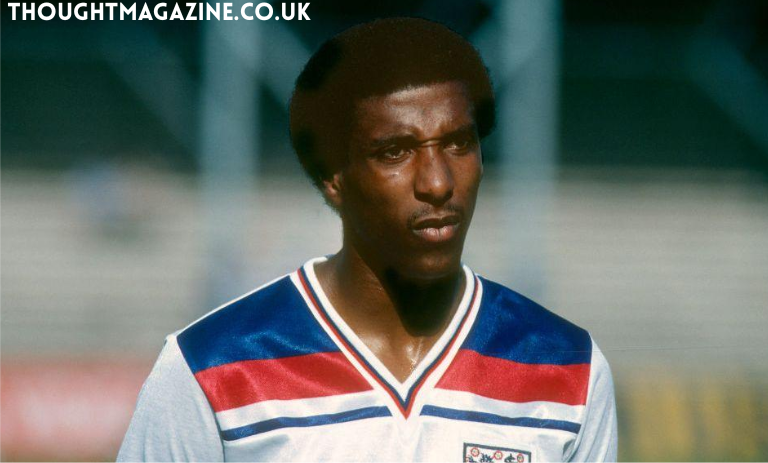
Viv Anderson holds an important place in the history of English football. His career included major trophies, appearances for some of the country’s best-known clubs, and international recognition, but one achievement gave him a significance that extended beyond results on the pitch. In November 1978, Anderson became the first Black footballer to represent England in a full senior international match.
His breakthrough came during a period when Black players in English football regularly faced open racial hostility from sections of the crowd. Anderson built his career while dealing with an environment that could be hostile both socially and professionally. Rather than allowing that treatment to define his football, he established himself as a dependable defender, won major honours with Nottingham Forest, represented England, and later became the first player signed by Alex Ferguson after Ferguson took charge of Manchester United.
Early Life and Jamaican Family Background
Vivian Alexander Anderson was born on 29 July 1956 in Nottingham, England. He grew up as the son of Jamaican immigrants at a time when many Caribbean families were establishing new lives in Britain. His upbringing placed him within a generation of Black British young people whose experiences were shaped by both their family heritage and the social conditions of post-war Britain.
Football became an important part of Anderson’s early years. Like many young players, he developed through local football before receiving the opportunity to enter the professional game. His path was not guaranteed. English football in the 1970s offered relatively few visible Black role models at the highest level, while racist attitudes remained common in stadiums and wider society. Anderson therefore entered professional football in circumstances very different from those faced by later generations of Black English players.
Beginning His Career at Nottingham Forest
Nottingham Forest provided Anderson with the platform on which his professional career developed. He made his way into the first team during the 1970s and eventually established himself as a right-back. His pace and ability to move forward from defence made him useful in a position that was gradually becoming more demanding.
His progress coincided with a major period in Nottingham Forest’s history. Under manager Brian Clough and assistant Peter Taylor, Forest developed from a Second Division club into one of the strongest teams in European football. Anderson became part of that transformation rather than simply joining a side that was already successful.
Playing regularly in such a competitive team required consistency. Forest’s success was built around organisation, discipline and players understanding their individual responsibilities. Anderson fitted into that structure and developed into a defender capable of contributing at both ends of the field.
Success During Nottingham Forest’s Historic Rise
The late 1970s brought remarkable success to Nottingham Forest. After earning promotion to the First Division, the club quickly challenged established teams at the top of English football. Forest won the First Division championship in the 1977–78 season, an achievement that remains one of the most notable league successes in the club’s history.
Anderson was part of the squad during this period and became increasingly important as Forest moved into European competition. The club went on to win the European Cup in consecutive seasons, lifting the trophy in 1979 and again in 1980. Those victories placed Forest among a small group of clubs to have successfully defended Europe’s leading club trophy.
For Anderson, the European triumphs demonstrated that his importance was not based only on his historic England appearance. He was competing successfully at the highest level of club football. His record at Forest established him as an accomplished professional in his own right.
Becoming the First Black Player in a Full England International
The defining historical moment of Anderson’s international career arrived on 29 November 1978. England selected him for a match against Czechoslovakia at Wembley Stadium. By appearing in that game, Anderson became the first Black footballer to represent the England senior team in a full international.
The importance of the appearance went beyond a single selection. Black footballers had been making progress within the English club game, but the senior national side remained one of the most visible institutions in British sport. Anderson’s inclusion demonstrated that a Black player could reach that level based on his performances in domestic football.
England won the match 1–0, but Anderson’s presence attracted attention that went far beyond the result. His debut became a reference point in discussions about race, representation and opportunity in English football. It also provided a visible example for young Black players who previously had few people with similar backgrounds representing England at senior level.
The Wider Meaning of Anderson’s England Debut
It is important to understand Anderson’s achievement within the conditions of football during the 1970s. Racist abuse from spectators was a serious problem, and Black players could be targeted simply because of their skin colour. Offensive chants, insults and other forms of discrimination were part of the experience faced by a number of players.
Anderson encountered this treatment during his career. His success did not mean that racism disappeared once he reached international football. Instead, his progress showed that he was able to build a major career despite barriers that should never have existed.
His England debut also helped create a path that many other Black players would later follow. Over subsequent decades, Black footballers became an established part of the England team. Anderson’s first appearance remains historically significant because it came before that representation became familiar to supporters.
Building an International Career
Anderson continued to represent England after his groundbreaking debut. He eventually collected 30 senior international caps during a career that extended into the 1980s. Competition for defensive positions was strong, meaning that regular selection could never be assumed.
He was included in England squads for major international tournaments, giving him experience at the highest level of national-team football. Although his England career was not always defined by an uninterrupted place in the starting lineup, remaining involved with the national side over a lengthy period reflected his standing within English football.
His international record is sometimes overshadowed by the historical importance of his first appearance. However, Anderson was not selected simply to create a milestone. He had earned recognition through his performances at Nottingham Forest and continued to be considered for England because of his ability and experience.
Moving from Nottingham Forest to Arsenal
After spending the central years of his early career with Nottingham Forest, Anderson moved to Arsenal in 1984. The transfer represented a significant change after his long association with Forest and gave him the opportunity to continue competing at a major First Division club.
At Arsenal, Anderson brought experience gained from league championships, European football and international competition. His time in London also demonstrated the length of his career at the top level. By this stage, he was no longer the young defender who had broken into the Forest side but an established professional with a substantial record behind him.
He remained with Arsenal until 1987. During his period at the club, Arsenal won the League Cup in 1987, adding another domestic honour to Anderson’s career before he moved on to the next stage.
Alex Ferguson’s First Manchester United Signing
In 1987, Anderson joined Manchester United. The move became historically notable for another reason: he was the first player signed by Alex Ferguson after Ferguson became Manchester United manager.
At the time, nobody could have known how successful Ferguson’s Manchester United career would eventually become. The club had not yet entered the period of sustained domestic dominance that would define much of the 1990s and 2000s. Anderson therefore joined during an earlier rebuilding stage.
His experience was valuable to a side undergoing change. He had already played under a successful manager in Brian Clough, competed in European Cup-winning teams and represented England internationally. Those experiences gave him an understanding of the standards required at leading clubs.
His Years at Manchester United
Anderson spent several seasons at Manchester United and was part of the club during the early development of Ferguson’s team. Although the trophies that later became associated with Ferguson had not yet begun arriving regularly, the foundations of a new period were gradually being established.
Anderson’s role came at a transitional point in both his career and the club’s history. Younger players were beginning to emerge, while Ferguson was reshaping the squad according to his plans. Anderson provided defensive experience during that process.
He left Manchester United in 1991, by which point he had already spent well over a decade playing at the highest levels of English football. His career, however, was not finished.
Sheffield Wednesday and the Later Playing Years
After leaving Manchester United, Anderson joined Sheffield Wednesday. His move allowed him to continue playing competitive football while bringing significant experience to another established English club.
He was part of Sheffield Wednesday during a period when the club was competing strongly in domestic football. By then, Anderson had experienced almost every major level of the professional game, from his early development at Nottingham Forest to European Cup finals and international tournaments.
His playing career later included spells with Barnsley and Middlesbrough. These final chapters showed his willingness to continue contributing after the most high-profile stages of his career had passed. His experience made him valuable not only through his performances but also through the knowledge he could provide within a squad.
Anderson’s Style and Role as a Defender
Anderson played primarily at right-back, a position that required defensive awareness as well as the ability to support attacks. His athletic qualities helped him operate along the side of the pitch, while years of top-level experience improved his positional understanding.
His career also came during an important period in the development of full-backs. Defenders in wide positions were increasingly expected to offer more than traditional marking and tackling. The ability to move forward, provide width and participate in attacking phases was becoming increasingly valuable.
Anderson’s pace suited these demands. His ability to perform within highly organised teams such as Nottingham Forest also showed that he could adapt his individual qualities to the tactical requirements of his managers.
Working in Coaching and Management
After his playing career, Anderson remained involved in football. He moved into coaching and management, using the experience accumulated across several major clubs and international football.
One notable stage came when he worked alongside Bryan Robson at Middlesbrough. Anderson served as assistant manager as the club attempted to establish itself at a higher level and attract significant players. This allowed him to experience football from the coaching side after spending many years as a player.
His post-playing involvement demonstrated that his understanding of football extended beyond his position as a defender. Like many former professionals, he had to adjust from making decisions on the field to helping prepare and organise players from the technical area.
Facing Racism During His Professional Journey
Any account of Anderson’s career must acknowledge the racism he encountered. Black footballers of his generation often played in stadiums where racial abuse was delivered openly from the stands. The lack of modern reporting systems and stronger anti-discrimination measures made the environment particularly difficult.
Anderson’s response was largely centred on continuing to perform. That should not be interpreted as suggesting that players were responsible for simply accepting abuse. Rather, it highlights the conditions in which he and other Black professionals were required to build their careers.
Football has since introduced stronger measures against racial discrimination, although racism has not disappeared from the sport. Anderson’s experiences remain relevant because they show how recently openly discriminatory behaviour formed part of the regular environment surrounding professional football.
Influence on Later Generations of Black England Players
After Anderson made his England debut in 1978, many Black footballers went on to become important members of the national team. Over time, the presence of Black players wearing the England shirt became a normal part of international football.
That change makes Anderson’s first appearance particularly important to remember. He entered the national side when there was no previous Black senior England international whose path he could directly follow. Players who came later were able to see that the barrier had already been crossed.
His influence should not be measured only by whether later players directly copied his playing style. His place in football history is also about representation. His achievement helped demonstrate that the England team could better reflect the society and football culture from which its players came.
More Than a Historical First
Describing Viv Anderson only as England’s first Black senior international can unintentionally reduce a long football career to one event. The milestone is important, but his playing record deserves equal recognition.
He won the English league championship with Nottingham Forest and was part of two European Cup-winning campaigns. He played for Arsenal and Manchester United, represented England 30 times and continued his career with several other professional clubs. He also moved into coaching after finishing as a player.
These achievements explain why Anderson received the opportunity to make history in the first place. His England selection came from his development into one of the country’s recognised defenders, not from symbolism alone.
Viv Anderson’s Place in English Football History
Viv Anderson belongs to an important generation of footballers who helped change perceptions of who could represent English clubs and the national team. His career unfolded during a difficult social period, but his achievements showed that racial prejudice could not prevent talented Black players from reaching the highest levels of the sport.
His story connects several major chapters of English football history. He played in Brian Clough’s successful Nottingham Forest side, won two European Cups, broke a racial barrier with England and later became Alex Ferguson’s first Manchester United signing. Few careers combine such different historical connections.
Conclusion
Viv Anderson’s football career was built on ability, persistence and years of competition at the highest level. His November 1978 England debut remains his most widely remembered achievement because it made him the first Black footballer to play a full senior international for the country. The significance of that moment becomes even clearer when viewed against the racial abuse Black players faced during that period.
However, Anderson’s career should be understood as much more than a single milestone. His success with Nottingham Forest, including two European Cup victories, his 30 England appearances, his spells with Arsenal and Manchester United, and his later work in football form a substantial professional record. His place in history rests both on the barrier he broke and on the football career that allowed him to reach it.